With rising transport costs continuing to challenge businesses across South Africa, alternative fuel technologies are attracting growing attention from fleet operators, delivery companies and small enterprises seeking to improve efficiency and reduce operating expenses.
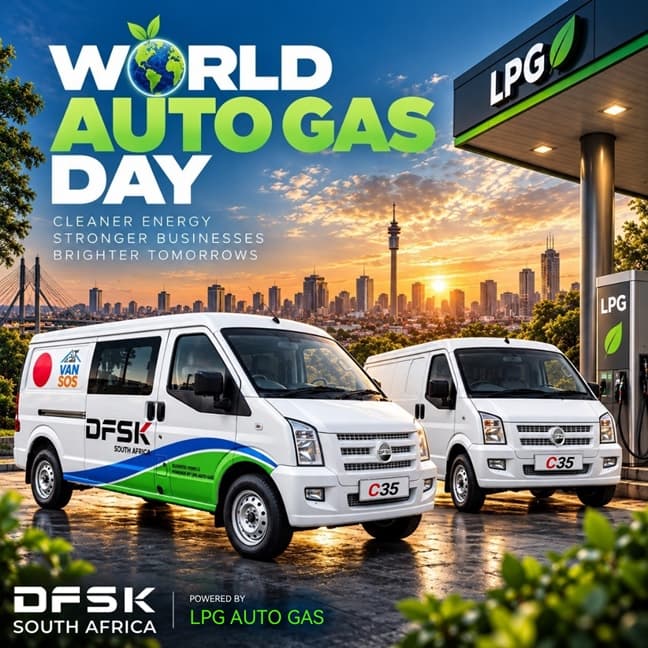
Marking World LPG Autogas Day, DFSK South Africa highlighted the potential benefits of liquefied petroleum gas (LPG) as a practical fuel alternative for commercial vehicle operators. The company believes that as businesses increasingly focus on total cost of ownership, factors such as fuel consumption and running costs are becoming just as important as vehicle purchase prices.
For many organisations, transport represents a significant portion of operational expenditure. As a result, there is increasing interest in solutions that can help control fuel costs without compromising mobility, reliability or productivity.
Dual-Fuel Technology Offers Greater Flexibility
To address these challenges, DFSK South Africa has introduced an OEM-approved LPG conversion programme across selected vehicles within its commercial range. The system allows vehicles to operate on either LPG or conventional petrol, giving drivers the flexibility to switch between fuel sources depending on availability and cost.
The dual-fuel approach is designed to provide businesses with access to lower-cost fuel alternatives while maintaining the convenience and security of petrol-powered operation when required. This flexibility can be particularly valuable for operators covering long distances or working across diverse operating environments.
Focus on Long-Term Operating Costs
According to DFSK South Africa, affordability should be considered over the entire lifespan of a vehicle rather than only at the point of purchase.
Chief Executive Officer Gina Giani says businesses continue to face financial pressure from rising operating expenses, with fuel often representing one of the largest ongoing costs.
The company's investment in LPG technology reflects its belief that vehicle ownership decisions should be based on total lifecycle costs, including fuel consumption, maintenance expenses and long-term operational efficiency.
Demonstrating LPG in Real-World Conditions
DFSK has also taken steps to demonstrate the practicality of LPG-powered transport under normal operating conditions.
A DFSK C35 Panel Van recently completed a roadshow covering approximately 1 200 kilometres while consuming 80 litres of LPG and only around a quarter tank of petrol. The exercise provided a real-world example of how LPG can be integrated into daily commercial operations while reducing dependence on conventional fuels.
Such demonstrations have helped increase confidence among fleet operators and business owners evaluating alternative fuel technologies.
Environmental Benefits Add to the Appeal
Beyond potential cost savings, LPG Autogas is also recognised for its environmental benefits. Compared with some traditional petrol and diesel applications, LPG has the potential to reduce certain harmful emissions, making it an attractive option for businesses seeking to improve their environmental performance.
As sustainability becomes an increasingly important consideration across the transport sector, alternative fuel solutions are expected to play a growing role in helping companies balance efficiency and environmental responsibility.
Growing Interest in Alternative Fuel Solutions
DFSK South Africa expects LPG to become an increasingly important part of the commercial vehicle market as businesses continue searching for ways to optimise operating costs and improve fleet efficiency.
Through dealer support, customer engagement and education initiatives, the company aims to raise awareness of the benefits associated with LPG-powered mobility while helping operators make informed decisions about their transport requirements.
As the commercial vehicle sector evolves, alternative fuel technologies are likely to become an increasingly important consideration for businesses looking to improve profitability, reduce operating expenses and prepare for the future of mobility.