New research from Volvo Cars has highlighted more than 50 years of progress in vehicle safety, demonstrating that the company has consistently developed crash protection systems that provide comparable levels of protection for both women and men.
The study, conducted by the Volvo Cars Safety Centre, examines decades of real-world collision data collected since 1970. That year marked the launch of a structured crash investigation programme in Sweden, allowing Volvo to systematically study accidents involving its vehicles and use the findings to guide future safety development.
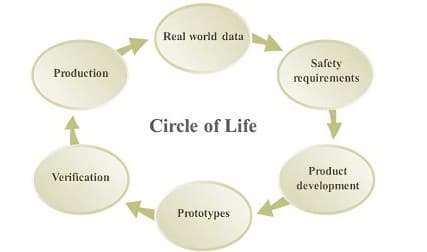
At the same time, Volvo introduced its 'Circle of Life' safety methodology, a continuous development process that connects real-world crash analysis with vehicle design, testing, verification and production. Insights gathered from actual accidents are used to establish safety requirements and testing procedures, creating an ongoing cycle of improvement that continues to inform new vehicle development.
According to the study, this long-term approach has contributed to a dramatic reduction in injury risk for vehicle occupants. When comparing Volvo vehicles produced between 2010 and 2019 with models built between 1970 and 1979, researchers found that overall driver injury risk had declined by 79%.
The most significant progress was recorded among female drivers, whose injury risk decreased by 88% over the same period. As a result, injury levels for women are now broadly comparable with those experienced by male drivers, a finding that challenges assumptions that vehicle safety systems inherently offer different levels of protection based on gender.
Volvo says the results demonstrate that equal protection can be achieved when vehicle design is guided by extensive real-world crash data and a detailed understanding of how different occupants experience collisions.
The study also found notable improvements in passenger safety throughout the vehicle. Rear-seat passengers wearing seatbelts now benefit from protection levels comparable to, and in some cases exceeding, those experienced by front-seat occupants. Volvo attributes this progress to decades of investment in rear-seat safety technologies, despite historically limited regulatory requirements for rear-passenger crash testing.
Åsa Haglund, Head of the Volvo Cars Safety Centre, said the company's focus has always been on understanding the needs of a diverse range of vehicle occupants.
“By studying real-world accidents and considering the needs of women, men and children with different body types, we have worked to provide a consistently high level of protection for everyone in the vehicle,” she said.
A central component of Volvo's safety philosophy is its crash research programme, which has analysed more than 50 000 real-world collisions involving over 80 000 occupants since its inception. The findings generated through this research form a critical part of the company's Circle of Life development process and continue to influence vehicle design, testing methodologies and future safety innovations.
Volvo says the programme has helped establish internal safety standards that frequently exceed regulatory requirements and standard safety-rating protocols. Development teams consider a wide range of occupant characteristics, including gender, height, body shape and weight, to better reflect real-world driving conditions and crash scenarios.
As part of its broader commitment to road safety, Volvo continues to make decades of safety research publicly available through its Equal Vehicles for All (EVA) initiative. The programme provides researchers, policymakers and other vehicle manufacturers with access to data and insights aimed at improving safety outcomes across the automotive industry.
The study was led by safety researchers Lotta Jakobsson and Thomas Broberg and presented at the 2026 Enhance Safety of Vehicle (ESV) International Conference. It is regarded as one of the most comprehensive long-term investigations into occupant protection conducted by an automotive manufacturer, covering crash scenarios such as frontal impacts, side impacts, rear-end collisions, rollovers, run-off-road incidents and multi-collision events.