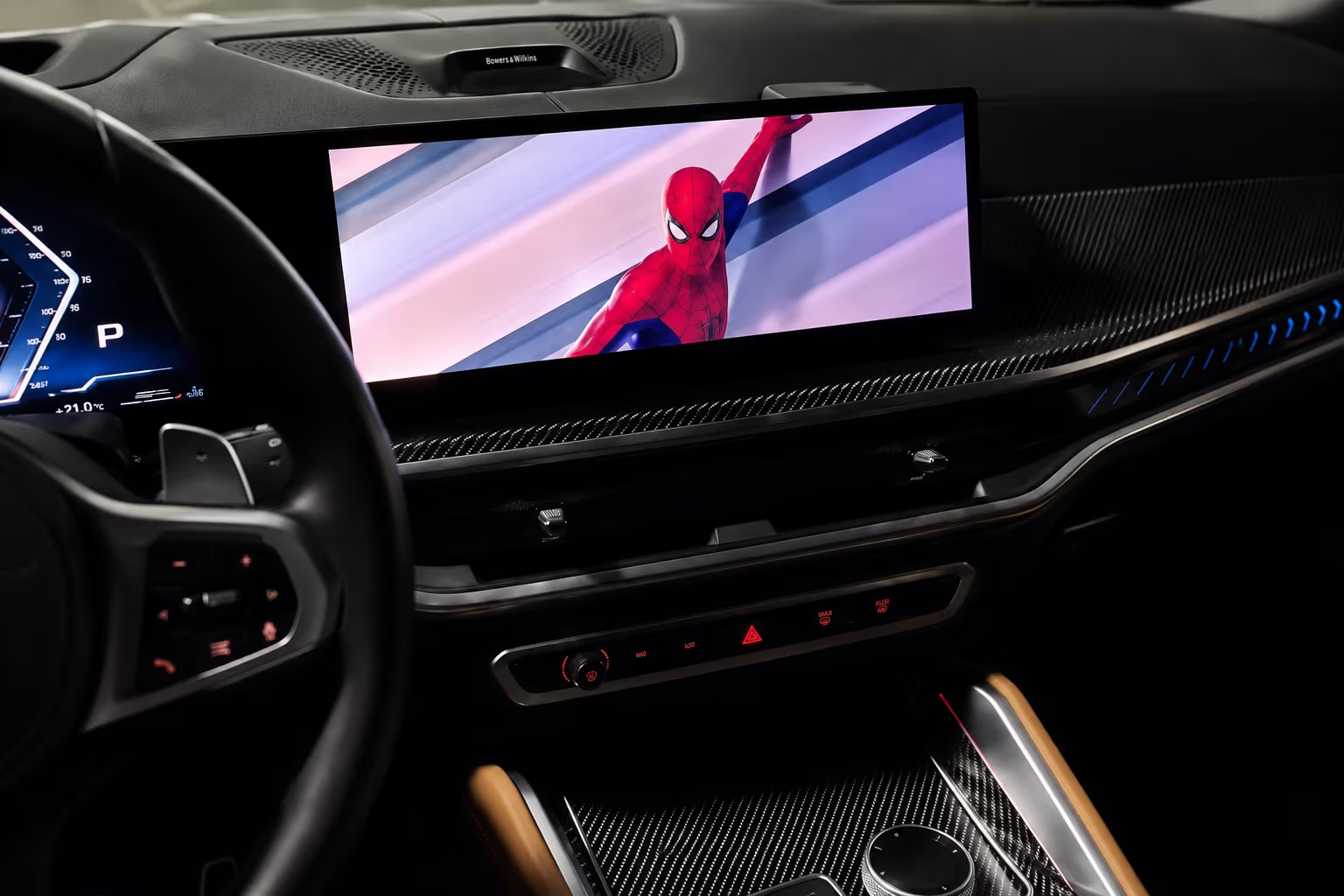
In late July, some BMW owners started their cars and found an unexpected passenger on the central screen: a promotion for Spider-Man: Brand New Day.
The campaign, pushed through an over-the-air update to compatible vehicles in more than 70 markets, used BMW’s iDrive “Festive App” to display a branded banner and, if selected, a full-screen animation linked to the film.
It was scheduled to run from late July until 10 August 2026, and applied to cars built after July 2020 running iDrive Operating Systems 7 through X.
On paper, BMW could argue that this was a harmless marketing flourish. The animation did not simply play without interaction, and the company described it as part of a broader tie-in with Sony Pictures and Marvel, which also included vehicle appearances in the film and a special iX3 at the Los Angeles premiere. Yet the reaction from many owners was far from amused. The problem was not really Spider-Man. It was the discovery that a carmaker could remotely place promotional material on the most visible screen inside a privately owned car.
That distinction matters. A car dashboard is not a streaming app or a free social media feed. It is part of a product customers have already bought, often at premium prices. The infotainment display controls navigation, audio, vehicle settings and, increasingly, essential driving information. When a branded movie banner appears there, it changes the emotional contract between owner and manufacturer. The vehicle starts to feel less like personal property and more like a managed platform.
The backlash was sharpened by BMW’s own previous language. In 2023, Stephan Durach, BMW Group’s Senior Vice President for Connected Company Development, reportedly said he did not see the company selling in-car screen space for commercials, calling the cabin “a private space”. That phrase has now returned as the centre of the argument. Owners are asking a simple question: if the screen can host a film promotion today, what prevents it from showing restaurant offers, insurance deals or paid charging-station prompts tomorrow?
The episode also lands in the shadow of BMW’s heated-seat subscription controversy. The company previously faced criticism for charging to unlock heated seats that were already physically installed in some cars, later abandoning that approach after customers objected to what felt like paying twice. That history has made buyers more alert to any sign that software-defined vehicles are being used to create revenue after the sale.
To be fair, this promotion is not the same as charging owners to use hardware they already possess. It is limited, optional in its full-screen form and tied to a specific entertainment partnership. But it still demonstrates a new power balance. Over-the-air updates can fix bugs, improve safety and add useful features. They can also quietly redraw the boundaries of ownership.
That is why this small superhero cameo has become a larger warning. In the connected-car era, luxury will not be defined only by leather, performance or screen size. It will also depend on restraint. The brands that earn trust will be those that treat the cabin not as monetisable real estate, but as the customer’s space.