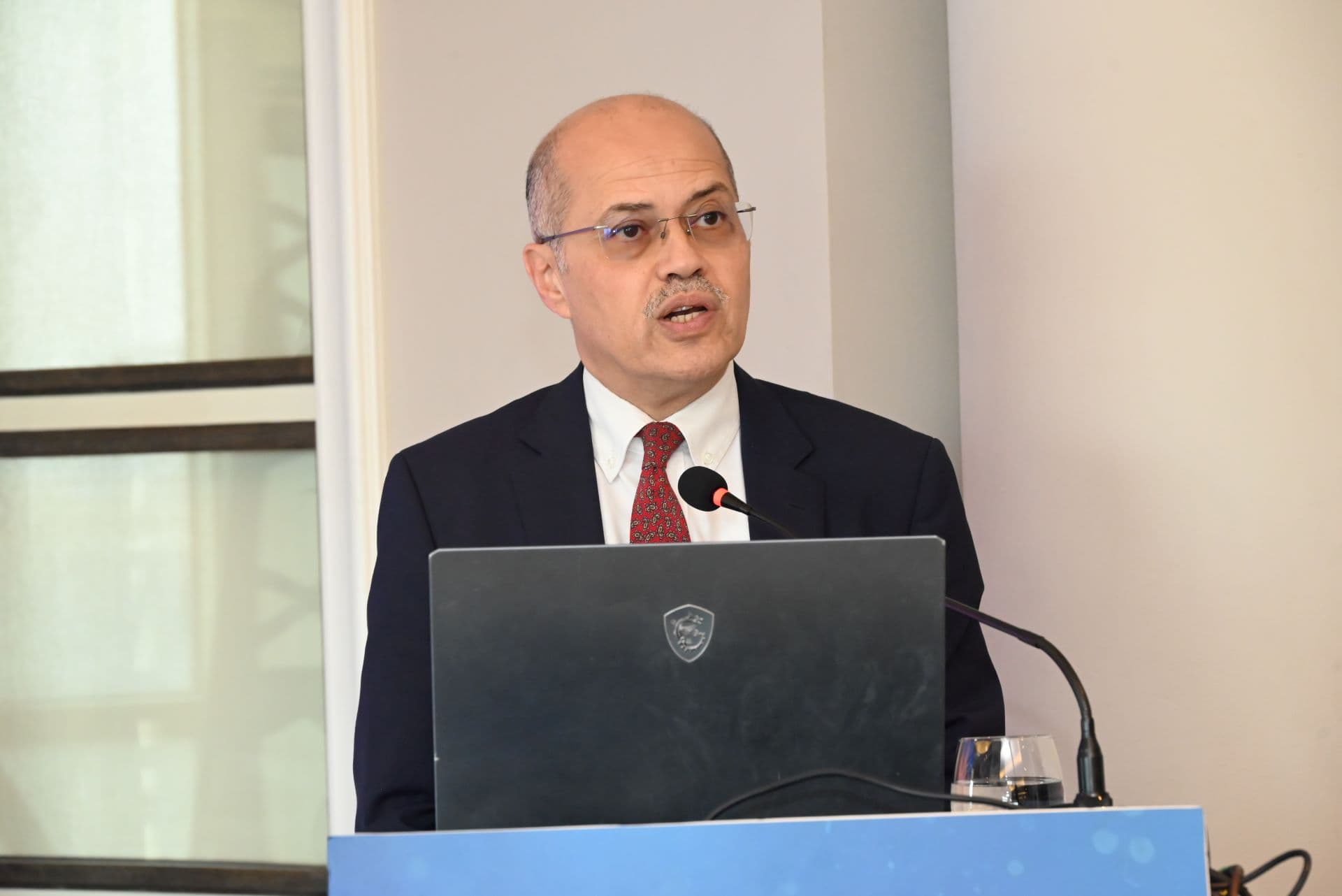
Speaking at a recent Automechanika breakfast, Dr Ahmed Fikry A Wahab, Board Member of the Engineering Export Council and Vice President for North Africa at the African Association of Automotive Manufacturers (AAAM), offered a clear challenge to the continent’s automotive stakeholders: Africa does not have a demand problem, it has ‘a market-formation problem’.
With Automechanika Frankfurt and Automechanika Johannesburg 2026 on the horizon, he argued that exhibitions should be treated as practical tools for industrial strategy, not box-ticking exercises.
To underline the point, he drew an uncomfortable comparison with India. India and Africa have broadly comparable populations, yet India produces more than five million passenger vehicles a year, while Africa’s output remains far smaller and more fragmented, concentrated mainly in Morocco, South Africa and Egypt. In his view, the gap is not explained by demographics alone. Demand exists and will grow with urbanisation and trade, but it remains split across many countries, currencies and regulatory systems, with weak vehicle finance, heavy reliance on used imports, and assembly plants that still lack sufficient supplier depth.
That is why the African Continental Free Trade Area (AfCFTA) automotive Rules of Origin mark a turning point. The policy milestone has been reached; implementation now matters. The new rules recognise how the automotive industry actually works. Africa cannot produce every input locally from day one, so the framework allows up to 60 per cent non-African input, with a qualifying African content threshold of 40 per cent. This is not a compromise of ambition. It is a practical starting point designed to unlock early trade and investment while encouraging deeper localisation over time.
Crucially, the rules enable cumulation. Value created in one African country can count towards originating content in another. This changes the logic of industrialisation. Instead of expecting each market to build a complete value chain alone, Africa can assemble an ‘African vehicle’ through a regional supplier ecosystem. Countries with strengths in wiring, batteries, tyres, plastics, metal parts, glass, electronics, testing, logistics or specialised services can participate even without hosting final assembly. The challenge shifts from writing declarations to making certification, customs validation, tariff schedules and standards recognition work in practice.
Within this continental approach, Egypt and South Africa should be seen less as competitors and more as complementary poles. South Africa brings decades of industrial policy experience, a mature OEM base and established supplier networks. Egypt brings a large domestic market, strategic geography linking Africa, the Middle East and Europe, strong logistics assets through ports and the Suez Canal corridor, and renewed ambition to expand exports and localisation. Connecting these strengths through a practical working corridor could become a model for other routes across the continent. To succeed, it will require finance, policy alignment and an investment pipeline involving institutions such as Afreximbank, the AfCFTA Secretariat and industry bodies.

This is also the strategic context for Automechanika Frankfurt and Automechanika Johannesburg. These fairs are not merely dates on a calendar. Used properly, they are instruments of industrial strategy. Frankfurt connects African companies to the global frontier in diagnostics, workshop systems, spare parts, remanufacturing, electrification and sustainability. It is where suppliers can benchmark themselves against international standards and start technology partnerships. Johannesburg, by contrast, anchors the African market conversation, offering insights into Sub-Saharan demand, distribution channels, fleet requirements and regional partnerships. For Egyptian firms, it should be viewed as a gateway into African aftermarket networks, not simply a South African exhibition.
The difference between impact and wasted effort is preparation. A trade fair visit without a plan is tourism; a visit with clear objectives is business development. Companies need target lists, product sheets, certification evidence and well understood capacity and cost structures. They should know whether they are seeking buyers, distributors, technology partners, suppliers, investors or market intelligence. Follow-up is equally decisive, because many deals are lost after the exhibition through slow quotations, unclear documentation or weak responsiveness.
The aftermarket deserves particular attention. In developing automotive ecosystems, it is often where capability begins. Demand for batteries, tyres, filters, lubricants, glass and body parts supports distributors, workshops and small manufacturers, and it creates a pathway from replacement parts into OEM supply. Yet the aftermarket is changing fast. Electric and connected vehicles, advanced diagnostics, software-enabled repair and sustainability requirements will reshape service models. Companies that learn early will remain competitive; those that wait will struggle.
The opportunity before Africa is not simply to attend more exhibitions. It is to change the continent’s position in the automotive industry, from importing vehicles and parts to building capability, jobs and technology. AfCFTA provides the framework, the Rules of Origin provide a practical tool, and cooperation between hubs such as Egypt, South Africa and Morocco can anchor regional value chains. Platforms like Automechanika can connect companies to technology, partners and markets. The next step is execution: moving from potential to production, from policy to projects, and from ambition to industrial scale.