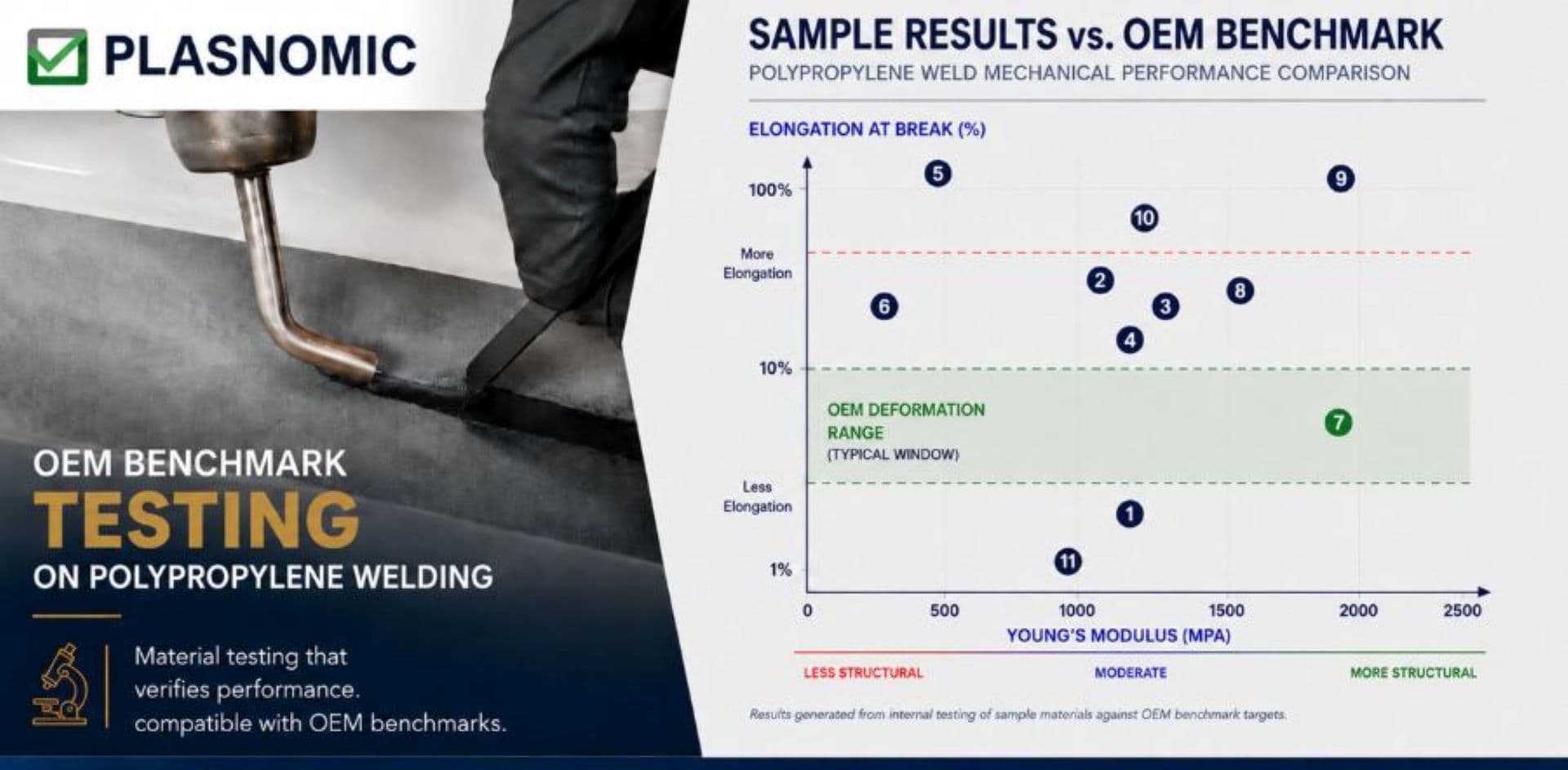
Plasnomic has completed the first phase of its global benchmarking programme for polypropylene bumper repair welds, an important milestone in its effort to develop industry best practice for repairing damaged bumper covers.
Mario Dimovski, Head of the Plasnomic Global Council, said the development brings the sector closer to technical, evidence-led guidance for plastic repairs.
The testing is being carried out within an IATF 16949-certified quality management framework for automotive product development, giving the programme a structured basis for process review, documentation, supplier comparison and best-practice development.
According to Plasnomic, the initiative is intended to answer a key technical question for the collision repair sector: how different materials and repair methods influence the performance, durability, flexibility and consistency of modern polypropylene bumper repairs.
The opening phase examined weld materials and fusion repair techniques currently used across the global collision repair market. Its aim was to determine which repair substrates and fusion methods most closely retain the original characteristics, flexibility and performance of OEM polypropylene bumper systems.
Benchmark testing covered repair materials and fusion approaches from 11 widely recognised plastic repair solution providers serving markets in North America, Europe and Asia Pacific.
Early results showed clear differences between repair materials and weld methods. Plasnomic said the findings underline the need to establish a technically validated, OEM-compatible repair substrate before carrying out broader comparisons between repair processes.
As a result of this first stage, the company has identified a foundational OEM-compatible repair substrate that will now be used as the reference point for the next round of comparative methodology testing.
Next stage will compare leading repair methods
With weld benchmarking now completed, Plasnomic is moving into the next phase, which will compare the main repair methodologies used on polypropylene bumper systems and examine how they affect performance.
This part of the programme will review common repair approaches, including filler-based plastic repairs, two-component adhesives and epoxies, reinforcement and staple-based techniques, fusion repairs and hybrid processes.
Each of these methods will be measured against the OEM-compatible repair substrate identified during the first phase of testing.
The aim is to build a clearer picture of how each repair method affects flexibility, structural integrity, repair thickness, cycle time, labour profitability, application processes, material use, operating cost, sustainability and overall repair outcomes.
Particular attention will be given to ADAS-sensitive areas, where thickness, density, substrate consistency and repair composition may have an impact on the performance of modern bumper systems.
Once these testing stages are complete, the results will support the creation of best-practice guidance for polypropylene bumper cover repair and contribute to an industry white paper based on technical assessment, data-led testing and evidence-based analysis.
Plasnomic said the white paper is intended to help repairers, insurers, OEM stakeholders, training bodies, suppliers and other industry leaders understand how repair methods can affect flexibility, durability, repair quality, efficiency, sustainability and integration with modern vehicle systems.
The wider goal is to provide a practical and technical basis for safer, more consistent, OEM-conscious and environmentally responsible plastic repair decisions across the global collision repair industry.