Wekaba, a leading manufacturer of medium to high-volume CNC machined automation components, has officially inaugurated its new R25-million automotive manufacturing plant, which the company says is a groundbreaking facility that will extend its capability to produce internationally designed components at world-class standards with zero defect.
Wekaba was established in 1981 and is a National Association of Automotive Component and Allied Manufacturers (NAACAM) member. As a Tier 1 and Tier 2 manufacturer the company specialises in CNC-turned and milled machined components for industries such as automotive, mining, rail and construction. It is a key supplier to leading companies in the pre-stressed cable industry, and is known for its innovative design capabilities, focused on precision-engineered products.
The event celebrated partnerships, notably with Toyota SA, which played a crucial role in the plant’s development. “With an eye toward future export opportunities across Africa and beyond, the company is set to become a key player in the global automotive market,” said Wekaba MD, Gunter Haacke.
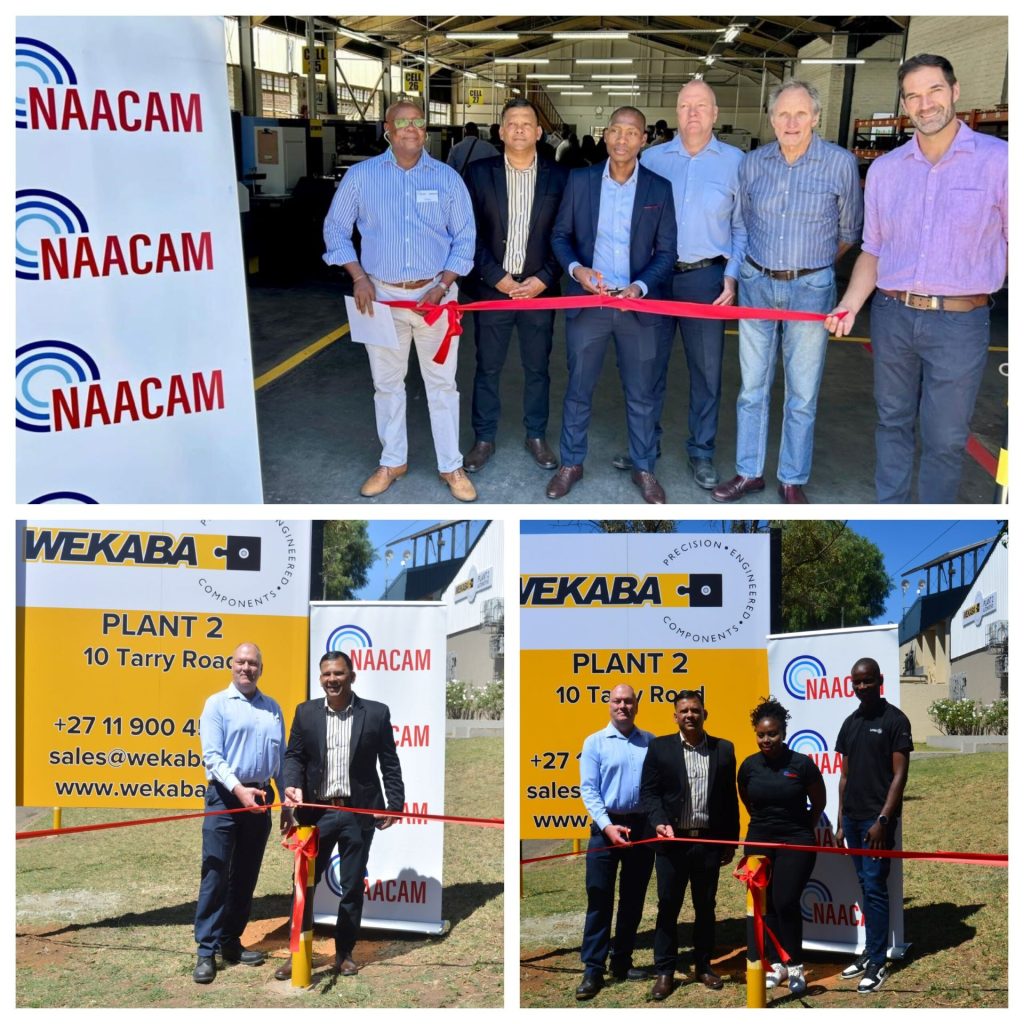
“The opening, attended by key partners and stakeholders, marks a significant milestone in Wekaba’s commitment to innovation and sustainability. Located in the Alrode industrial zone in Johannesburg, the plant is equipped with cutting-edge technology and a stringent quality control centre, poised to deliver safety-critical production parts that meet the highest industry standards,” he added.
“Engineers collaborate to create parts that ensure exceptional fitment while promoting sustainable practices. The opening of the plant has also resulted in the creation of 22 new jobs, offering fresh opportunities in a challenging economic landscape,” Mr Haacke said.
He added that Wekaba’s expert team excels in product development management, collaborating closely with clients to deliver tailored solutions that drive efficiency and innovation in manufacturing.
“As production ramps up, the facility will not only be a site for manufacturing, but will be a vibrant hub of innovation, where employees are encouraged to share ideas and collaborate on projects that push the boundaries of automotive technology.”
“With ISO 9001:2015 certification and ongoing efforts toward IATF 16949 certification, Wekaba ensures the highest quality standards in its operations. The company is B-BBEE Level 3 certified and 80% black-owned, reflecting its commitment to empowerment and inclusivity,” Mr Haacke noted.
The factory facilities include over 100 machine centres providing the capacity to consistently deliver high-volume machined and suspension components to first and second-tier automotive suppliers to support localisation efforts in the automotive industry. “With a dedicated team of mechanical design engineers, Wekaba is well-equipped to develop revenue-generating products that meet evolving market demands,” Mr Haacke concluded.