Webfleet recently released their second annual Road Safety Report 2023 based on responses from 54 individuals representing 52 fleets that collectively own 7 948 trucks operating in South Africa.
The survey was conducted between June and August 2023.
Out of the 52 fleet managers who participated in the survey, the majority, comprising 37 respondents, reported that their fleets operate in Gauteng. In contrast, the Northern Cape and North West provinces had the fewest respondents, with a total of 12, whose fleets are active in those regions. Respondents had the option of selecting multiple provinces where their fleets operate.
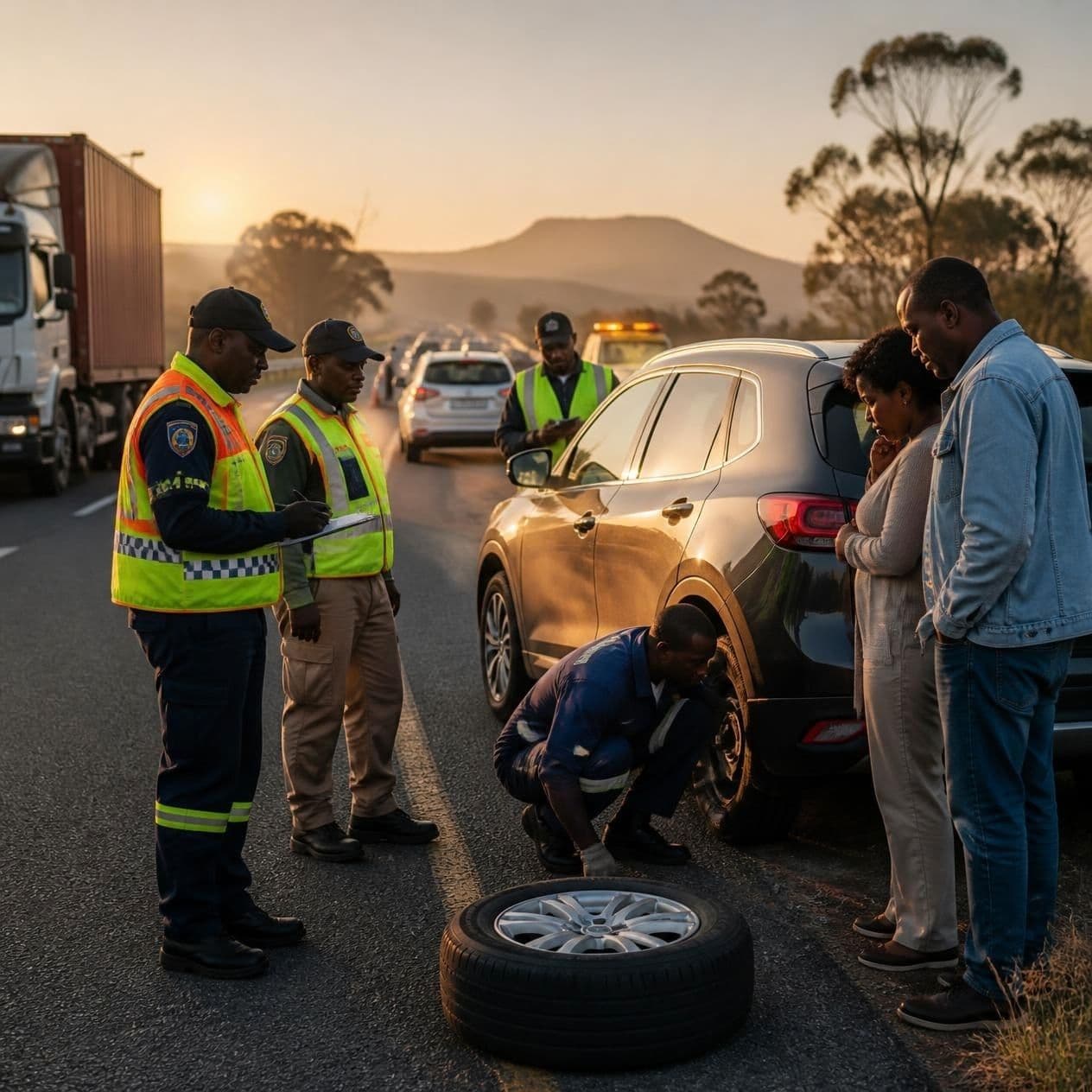
There were a total of 1 313 collisions reported by respondents. This is 16.5% of the total number of fleet vehicles of 7 948. It represents an increase from last year’s Webfleet Road Safety Report, where “out of the total of 14 073 trucks represented, 1 253 (8.9%) collisions occurred”. Of the 52 respondents, 12 indicated they had no accidents during the course of the year. This is up from four respondents in 2022.
Of the ten worst-affected respondents, which represent 87% of incidents, five indicated that most incidents occurred at night, between 10pm and 6am. Three respondents said incidents occurred randomly, at no particular time. One said there’s an incident prevalence between 10am and 2pm. Another indicated that the afternoons into the early evenings (2pm-6pm) had a high propensity for incidents.
When asked to rate the prevalence of incidents, respondents cited “Other drivers”, “Poor road conditions” and “Criminal activity” as the most prevalent causes of incidents. “Driving under the influence” and “Vehicle malfunctioning” were the least prevalent.
Driver behaviour and road conditions happened to be the most serious challenges faced by respondents. All challenges listed in the survey were selected by some respondents, showing a propensity for these issues across the board.
The danger created by third-party drivers was mentioned a number of times in the comments as an additional challenge faced by the road freight industry.
Respondents were asked: “What are the key areas on which the government should focus its efforts to improve road safety?” Respondents could select three of the areas provided. All items were selected as important. However, “Increase funding for road infrastructure development and maintenance” was selected by most respondents, followed by “Improve road signage and markings for better visibility and guidance”.