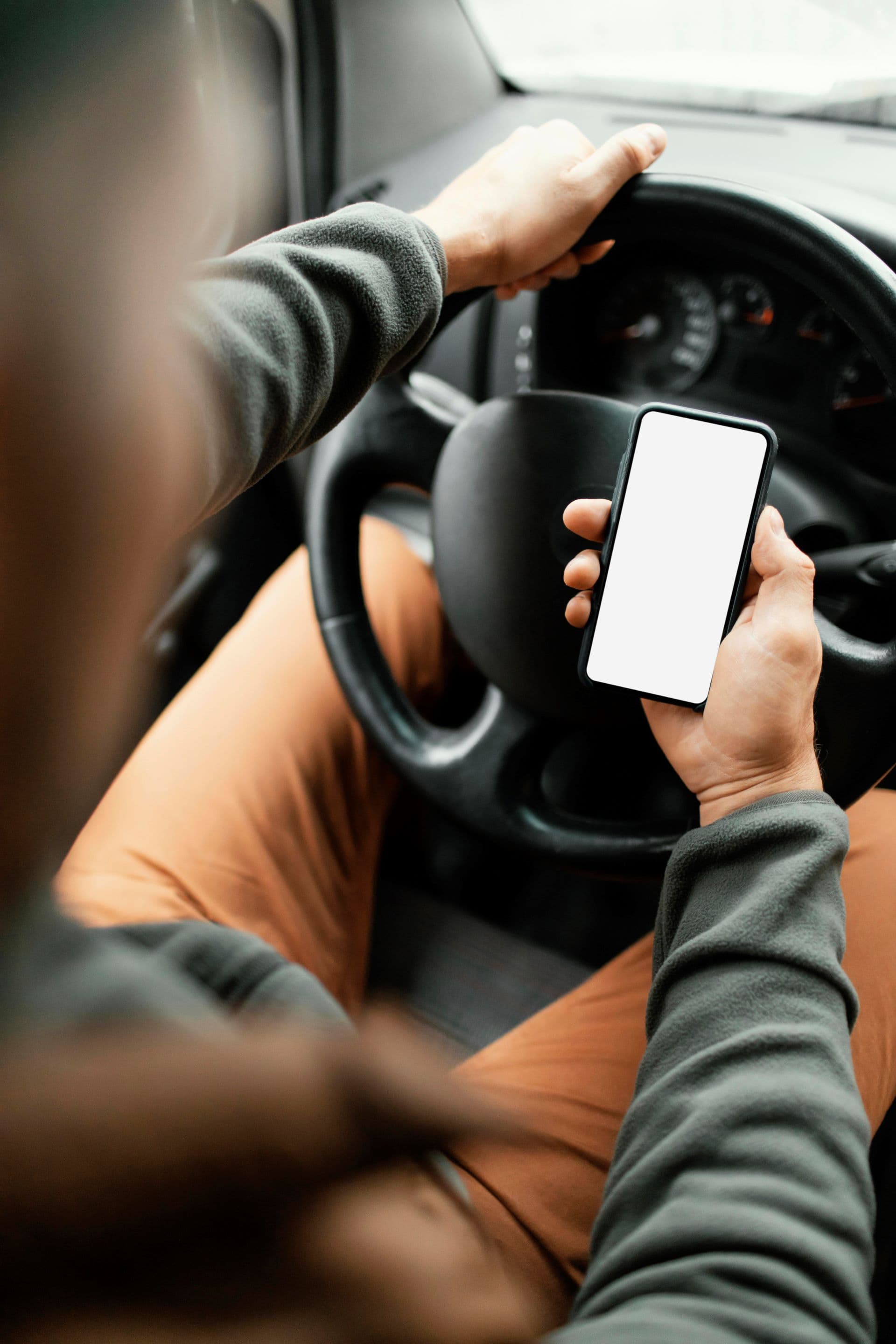
Drivers who exceed the speed limit are also more likely to handle their phones, creating a hazardous combination that raises crash risk, according to new research from the Insurance Institute for Highway Safety (IIHS) in the U.S.
For years, many road-safety experts assumed motorists mainly reached for their phones when travelling slowly. However, data from insurers’ safe-driving apps suggests the reverse is often true once you focus on free-flowing traffic. IIHS President David Harkey notes that, when researchers remove time spent stopped at junctions, stuck in congestion, or travelling along small residential streets, phone handling increases as speed rises above the posted limit.
The pattern differs by road type. On limited-access roads, such as motorways and other routes accessed via slip roads, phone handling rose sharply. The study found that the share of driving time spent handling a phone increased by 12 per cent for every additional 5 mph above the local speed limit. On other main roads, including arterial routes that link towns and frequently include traffic lights, roundabouts and crossings, the increase was smaller at 3 per cent for every 5 mph over the limit.
Worryingly, the link between speeding and phone handling was strongest on roads with the highest limits. On limited-access roads posted at 70 mph, the increase in phone use associated with each 5 mph over the limit was markedly higher than on comparable roads posted at 55 mph. A similar trend appeared across other road categories as limits rose.
Researchers suggest several possible reasons. Risk-taking drivers may be more likely to both speed and use their phones. Stress may also play a role, as phone use can spike during busy periods such as commuting and school drop-off, which may also encourage drivers to hurry. Road conditions matter too: lighter traffic, fewer pedestrians and longer gaps between stoplights can reduce perceived risk, potentially prompting drivers to glance down at a screen even at higher speeds.
The analysis draws on a growing pool of telematics data from safe-driving apps used by insurers to adjust premiums. Using GPS, motion sensors and phone data, these apps capture speed, location, harsh braking and when a phone is actively handled.
For the study, researchers analysed nearly 600,000 trips taken between July and October 2024, using data supplied by Cambridge Mobile Telematics. Phone handling was detected when a phone rotated significantly while unlocked. Speeding was determined by matching GPS locations to a speed-limit database, then comparing travel speed to the posted limit.
The findings have clear implications for enforcement. Rather than treating speeding and distracted driving as separate challenges, the IIHS argues that combined efforts could deliver stronger results, particularly on high-speed routes. The study also strengthens the case for technology, including safety cameras capable of detecting both speeding and phone use, where traditional roadside enforcement is more difficult.