Tesla has set its sights on one of the least glamorous components in a car: the trim clip.
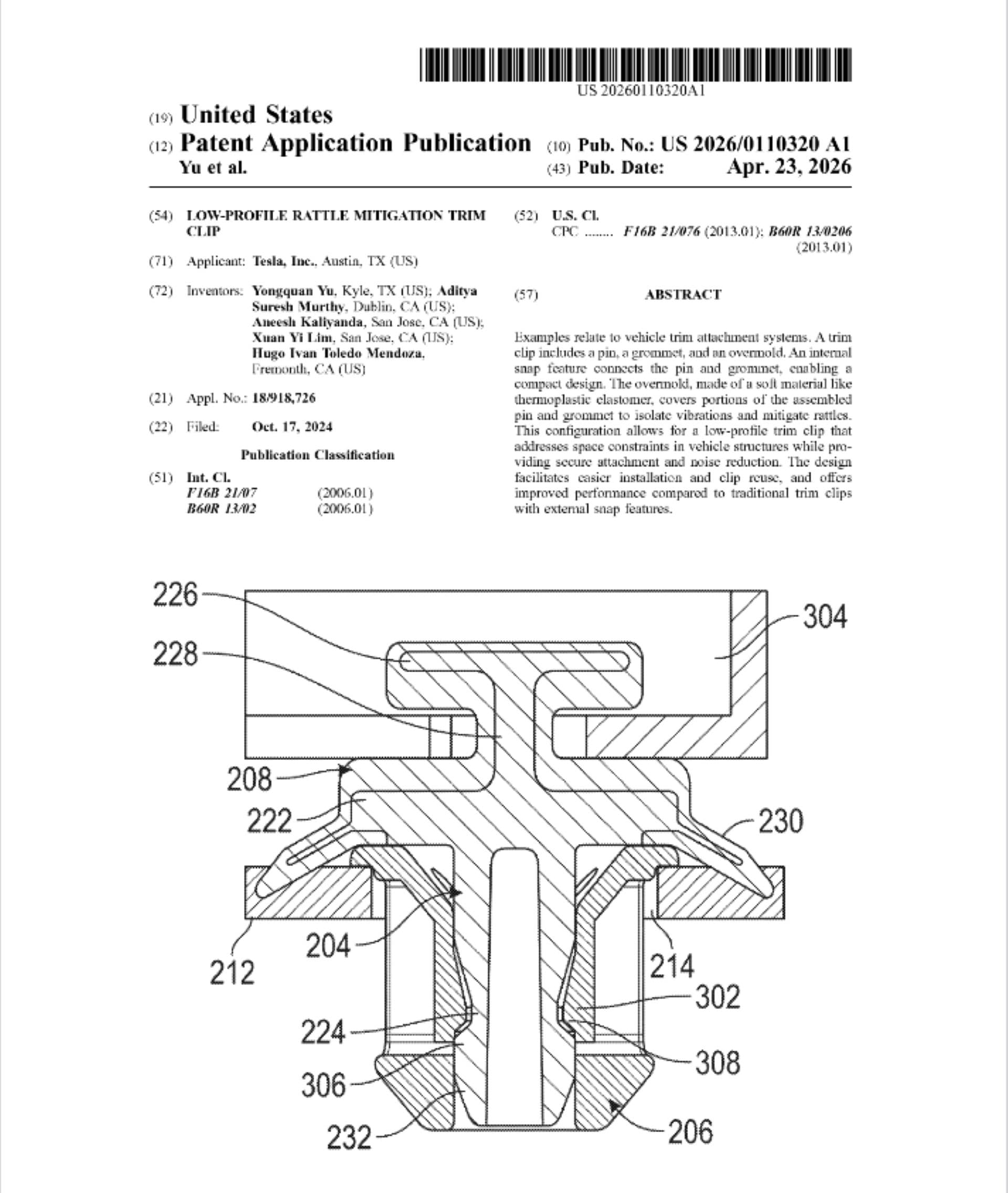
In a newly published patent application, the company outlines a redesigned fastening system intended to reduce the rattles, buzzes and vibration that can creep into a vehicle cabin over time. The filing, published as US 2026/0110320 A1 on 23 April, focuses on improving the small clips that secure interior and other trim panels to the body structure.
Conventional clips are usually moulded as single-use plastic parts. After repeated vibration, temperature changes and servicing, they can loosen and begin to transmit road noise and minor panel movement directly into the passenger compartment. Tesla’s proposal takes a different approach by pairing rigid structural elements with a softer damping material, aiming to keep panels secure while isolating unwanted movement.
According to reports on the patent and the patent summary itself, the design combines a pin and a grommet made from glass-fibre-reinforced nylon with an overmoulded layer of thermoplastic elastomer, or TPE. That softer outer layer is intended to spread load more evenly and act as a barrier against vibration passing from the body into the trim. The result is a low-profile clip designed not only to hold firmly, but also to contribute to a calmer, more refined cabin environment.
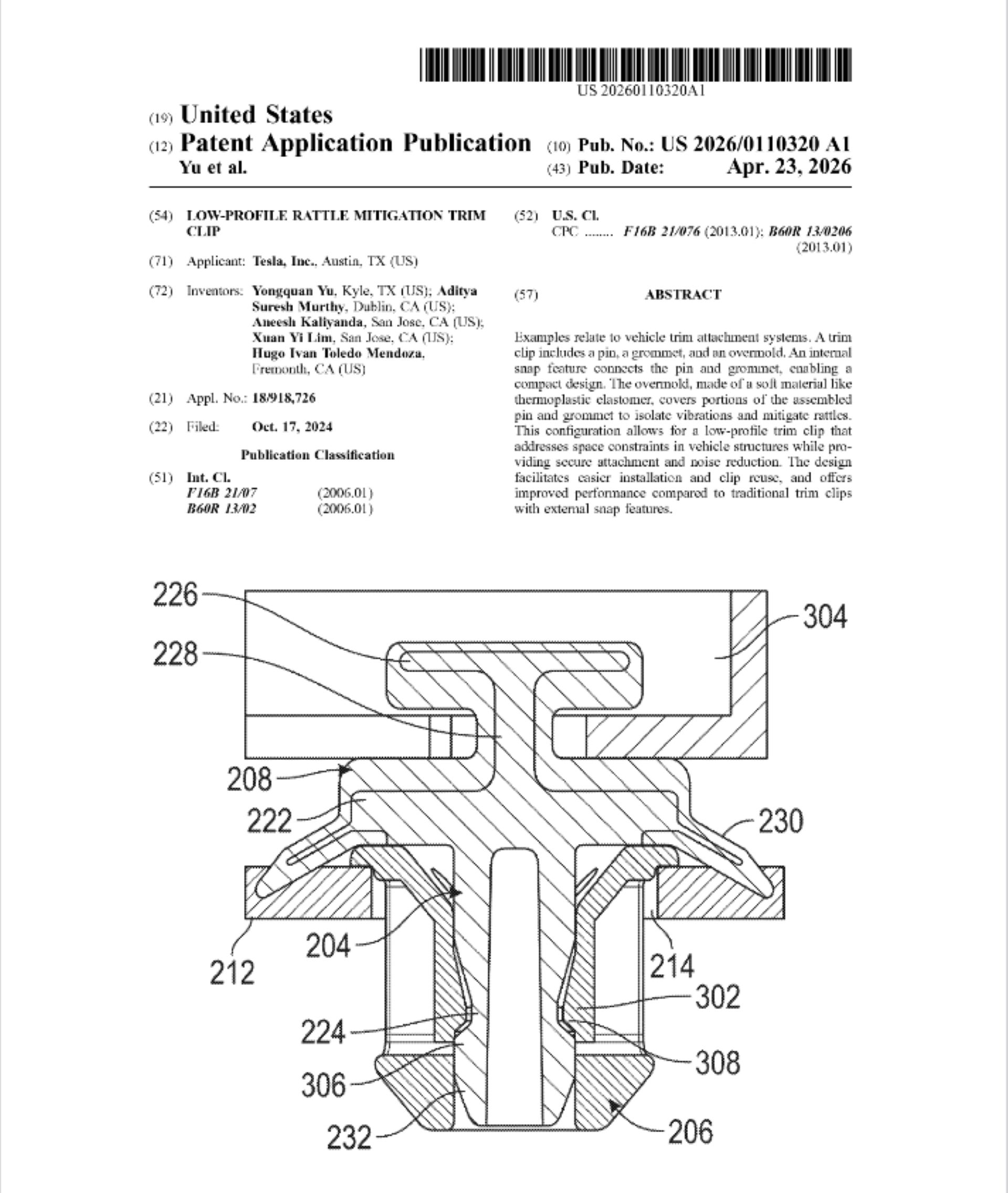
A new Tesla patent aims to fix a common automotive item for a more peaceful ride, revolutionizing its design to remove vibrations and noise during normal operation.
Detailed in US 2026/0110320 A1 and published on April 23, the patent re-engineers the humble trim clip—the small plastic fastener that secures interior panels to the vehicle’s body structure. Traditional clips are single-piece plastic parts designed for one-time installation.
Over time, they loosen, rattle, and transmit road noise, suspension vibrations, and minor panel buzz directly into the passenger compartment. Tesla’s new design turns that ordinary item into a reusable, two-material vibration-damping system built for long-term silence.
Another important detail is packaging. The patent describes an internal snap feature that allows the clip to remain compact, which could help it fit into tighter spaces than more traditional fasteners. That matters as vehicle interiors become more densely packaged and manufacturers look for ways to reduce part size without sacrificing retention strength or ease of assembly.
For drivers, the real value lies in noise, vibration and harshness, commonly shortened to NVH. Electric vehicles, lacking the constant background sound of an internal combustion engine, tend to expose smaller noises more clearly. That makes squeaks, creaks and trim buzz more noticeable, which in turn raises the importance of seemingly minor components such as clips and fasteners.
The engineering figures included in coverage of the filing suggest Tesla has tried to balance ease of installation with strong retention. Reports cite insertion and pull-out forces for both the grommet and the pin, with the grommet holding more firmly to the sheet metal than the pin does to the grommet. In practice, that could allow technicians to remove trim for repairs and then reattach it without replacing the entire fastening system each time.
If the concept makes it into production, the benefit may be felt less as a headline feature and more as an overall impression of quality. A quieter cabin, fewer recurring trim noises and better long-term serviceability all help shape how solid a vehicle feels. For Tesla, the patent is a reminder that improving the ownership experience is not only about batteries, software or autonomy. Sometimes it comes down to rethinking the smallest parts in the car.