The Insurance Institute for Highway Safety (IIHS) has introduced a new assessment focused on how effectively modern seat and head restraint designs prevent neck injuries in rear-end collisions.
According to the organisation, neck sprains and strains remain the most common injuries reported in American motor insurance claims, prompting the development of a more demanding evaluation.
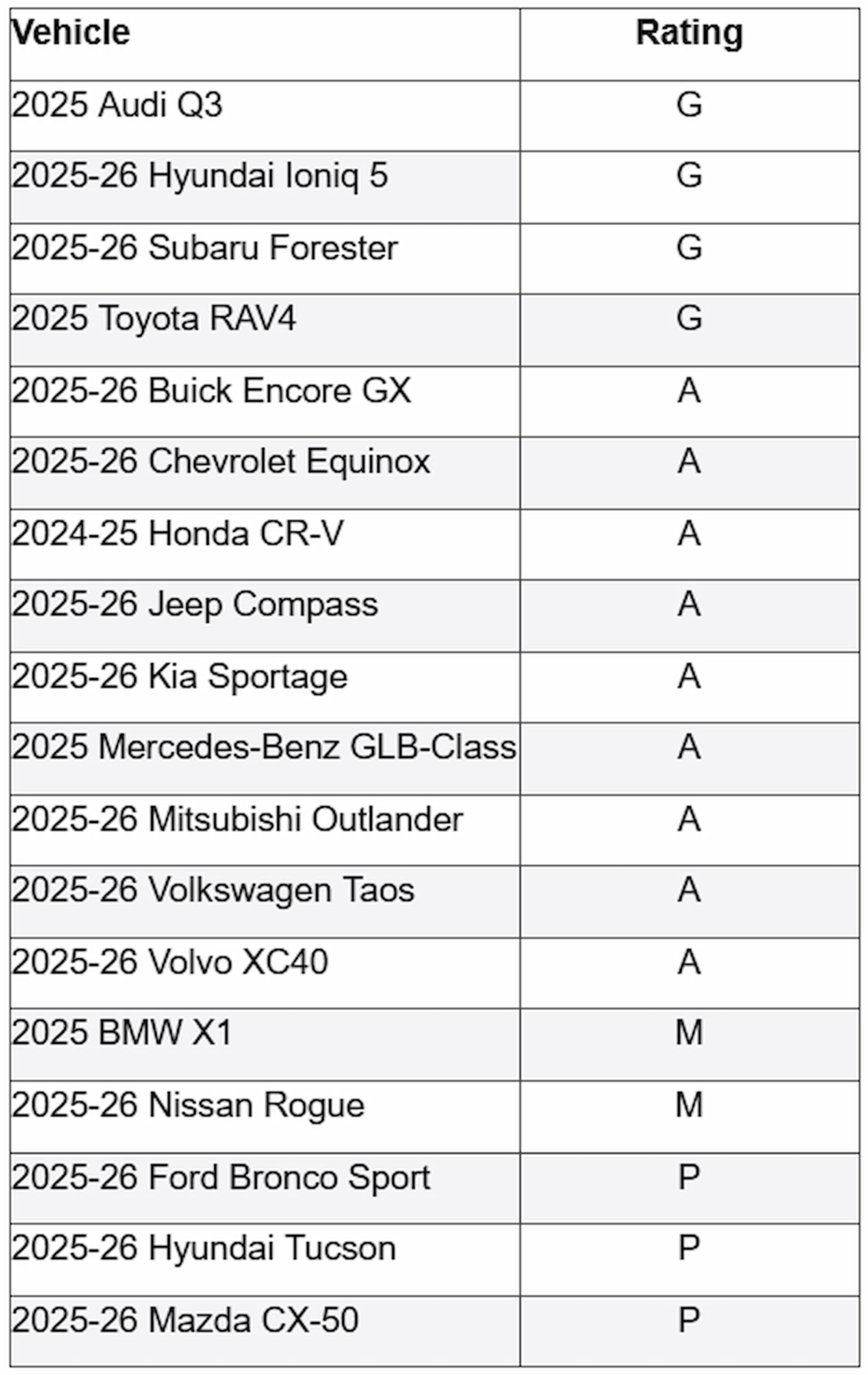
Of the first 18 small SUVs tested, only four achieved a good rating: the Audi Q3, Hyundai Ioniq 5, Subaru Forester and Toyota RAV4. Nine models were judged acceptable, including the Buick Encore GX, Chevrolet Equinox and Honda CR-V, while the BMW X1 and Nissan Rogue were considered marginal. Three models — the Ford Bronco Sport, Hyundai Tucson and Mazda CX-50 — performed poorly. Most of the vehicles assessed were 2025 models, though some ratings will apply to 2026 versions as well.
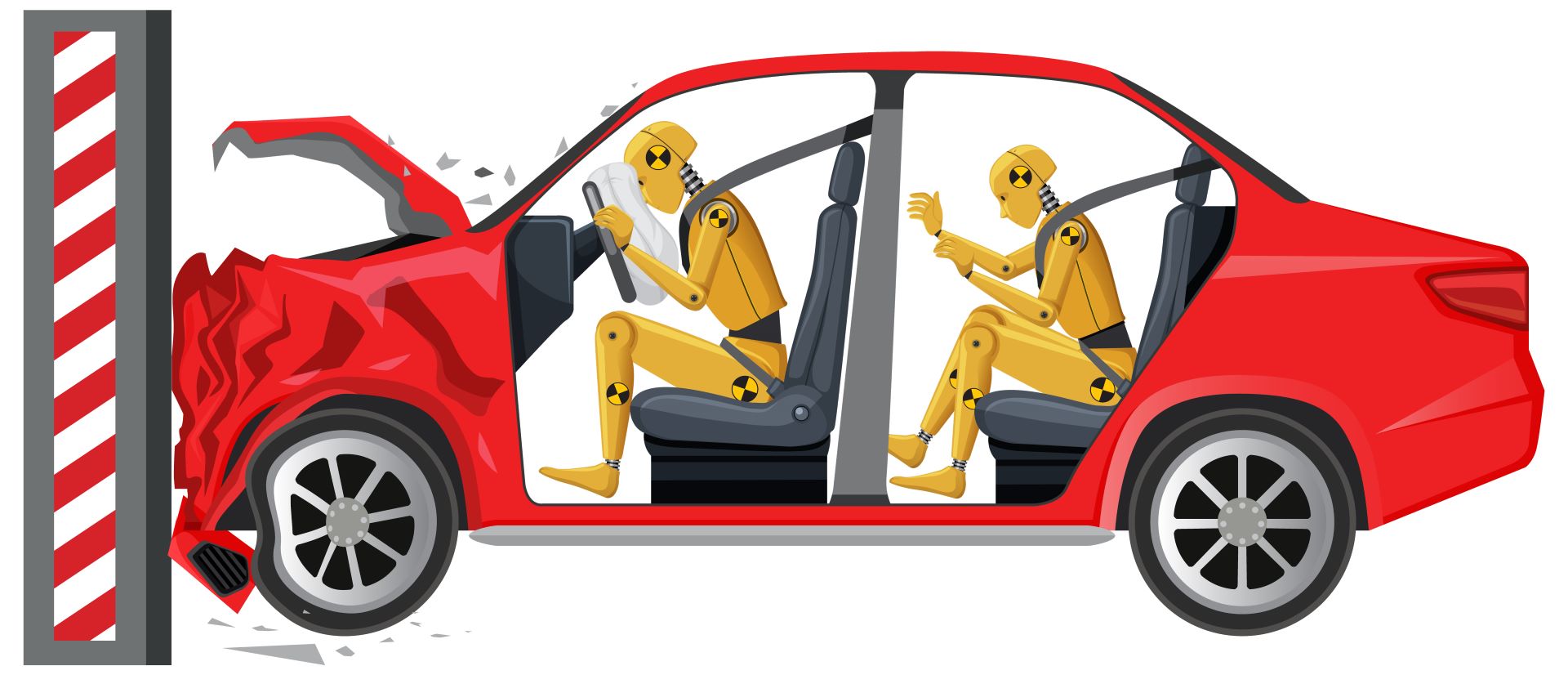
The new procedure replaces an earlier test that had become outdated after manufacturers improved their designs sufficiently for nearly all vehicles to score well. Despite those gains, real-world injury data showed that whiplash remained common and that some vehicles protected occupants better than others. To refine its methods, the IIHS studied seats from 36 modern vehicles at three different simulated impact speeds and compared the resulting dummy data with insurance claim statistics.
The updated test now uses two acceleration pulses intended to represent moderate and higher-speed rear impacts. Several established measurements remain important, such as how quickly the head restraint contacts the dummy’s head and the acceleration of the T1 vertebra at the base of the neck. New criteria have also been introduced. These include pelvic displacement — indicating how effectively the seat absorbs crash energy — and the forces that cause the head to tilt forwards or backwards if the restraint is poorly positioned.
According to the IIHS, reducing these movements is likely to lessen the risk of whiplash injuries, even though the exact biological mechanisms are not fully understood.
When results were analysed, the poorest-performing vehicles showed large movements of the dummy’s head relative to its spine, with visible straightening of the cervical vertebrae. In some cases the head restraint forced the head downwards; in others it allowed the head to move excessively backwards. The Bronco Sport, for example, provided weak support and allowed a large difference in speed between the pelvis and head.
By contrast, the best-rated models maintained good head-and-spine alignment, minimising relative motion and preserving the natural curve of the neck.
Whiplash prevention ratings for 18 small SUVs
G-Good
A-Acceptable
M-Marginal
P-Poor