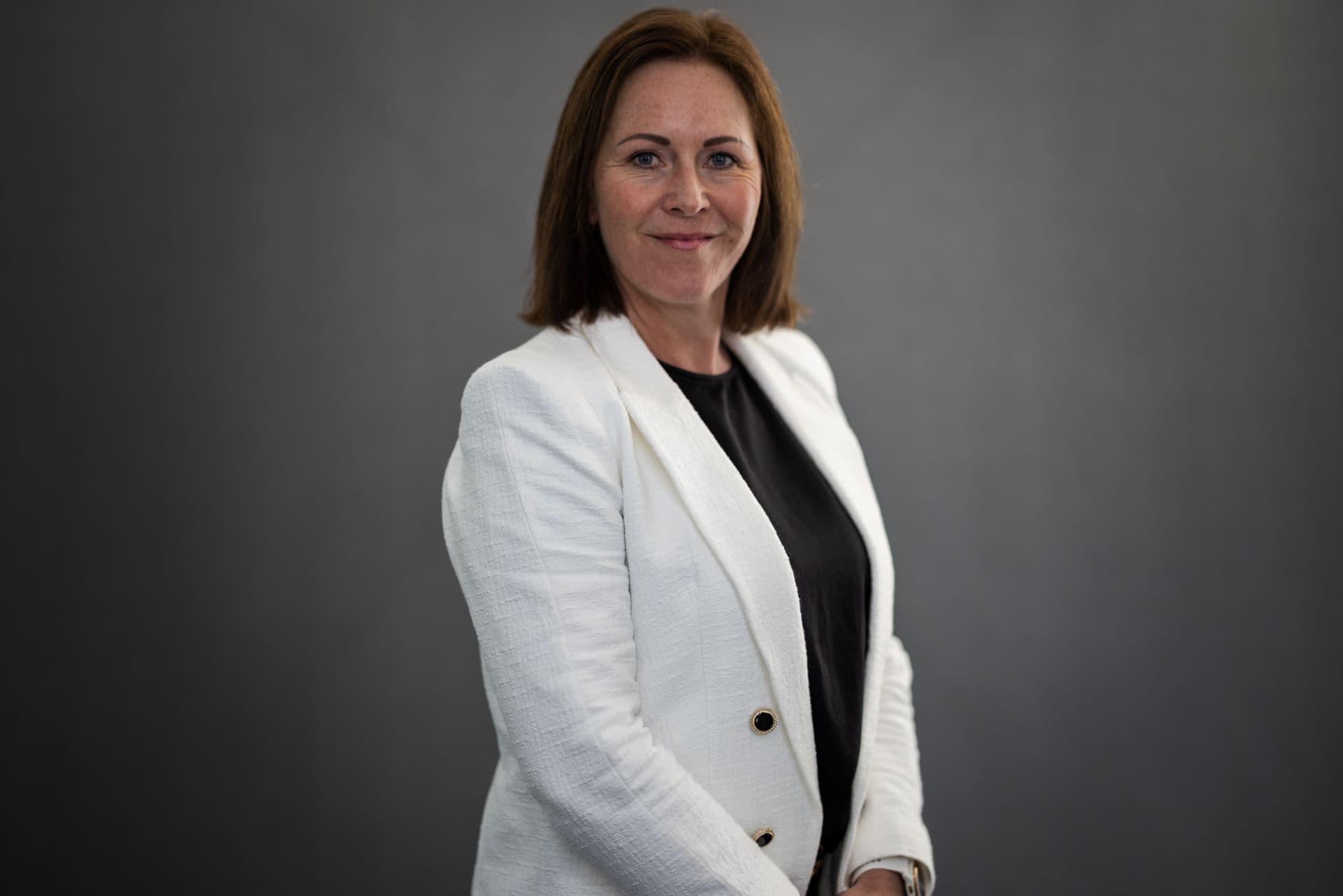
When Nina Bratlie stepped into her role as Managing Director of Volvo Financial Services South Africa, she brought with her three decades of global finance experience and a clear focus on partnership-led growth. Recently appointed to lead the South African operation, Bratlie is prioritising deep customer engagement, regulatory readiness and integrated solutions as the business positions itself for the next phase of industry change.
In this interview, she shares her early priorities, market expectations and leadership philosophy.
You mentioned looking forward to understanding South African customers and their unique operating conditions. What differences or challenges are you expecting compared to the Norwegian market, and how do you plan to navigate them in your first few months?
In my first months, I aim to meet customers across the various industries we support to better understand market dynamics and operating conditions so that we can support them effectively.
While South Africa presents a different environment than Norway, customer discussions around industry outlook, financing structures, pricing, and residual values remain similar.
You’ve said the last five years have brought more change than the previous 25. Which of those shifts — digitalisation, regulation, geopolitical uncertainty, or customer requirements — do you believe will most impact the South African market specifically?
From my perspective, I see three factors having significant impact in the South African market.
The first is around regulatory developments, which I believe will have the greatest impact. South Africa is already a highly regulated market and further changes are expected across financial services, insurance distribution, as well as in sector-specific industries like mining.
The second is digitalisation and how it will continue to shape customer expectations and strengthen regulatory compliance. I see this as an enabler.
Finally, while geopolitical uncertainty remains significant, our focus remains on supporting customers through business cycles as a trusted partner.
You emphasise building close professional partnerships with customers. How do you practically build those partnerships in a new market, and what does “understanding their operating requirements” look like in day-to-day terms?
Strong partnerships start with understanding each customer’s business and operating environment. I prioritise face-to-face meetings with customers so we can discuss their daily challenges and opportunities.
Trust is built over time through consistent engagement, and even when we cannot meet expectations immediately, we remain committed to finding the right solution.
VFS aims to bring “confidence and resilience” to customers. In the South African context, what does building a more resilient and sustainable customer base mean, and what role should a captive finance provider play in that journey?
I see resilience as helping customers manage volatility and navigate transitions successfully. VFS offers flexible financing solutions along with a range of services that help customers work toward their goals, and we are committed to support and advise within our capacity.
As the new Managing Director, what are the top priorities on your strategic agenda for VFS South Africa over the next 12–24 months?
My key priorities include driving strong growth, supporting Volvo Trucks and Volvo Construction Equipment in increasing unit sales, and expanding our customer base. We aim to strengthen relationships with existing customers while onboarding new ones.
One of our top priorities is, together with Volvo Trucks, to develop a seamless total solution where customers can acquire the truck, connected services, financing, and insurance in a single process.
With 30 years in finance — from asset finance to factoring and insurance — which leadership lessons from your career do you think will be most valuable in this new role?
I have learned that things are not always as they appear, so I avoid making assumptions. I strongly believe in teamwork — success comes from shared goals, collaboration, and recognising that no leader succeeds alone.