Sustainability plays an important role in all industrial sectors with regard to climate protection, resource conservation and environmental compatibility.
Appropriate filtration solutions can make a significant contribution to this. At the FILTECH trade fair, which took place in Cologne from 12 to 14 November, MANN+HUMMEL presented their new filter models for cleaner mobility and cleaner air that offer high environmental standards while maintaining high performance.
Sustainability without compromising performance
In its latest innovations, filtration specialist MANN+HUMMEL has focused on the topic of sustainability without compromising on performance. For example, the carbon footprint of a high-performance air filter element typically used in trucks has been significantly reduced by using renewable, environmentally friendly materials, without compromising on the performance that. The new design includes recycled plastics and bio-based raw materials. This approach not only conserves resources, but also fulfils the requirements of automotive customers and the test standards.
Nanofibres for cleaner air in the passenger compartment
Another highlight is media for cabin filters, which ensure cleaner and purer air in vehicles. The use of a nanofibre layer in filter media increases the mechanical separation – this means that the performance of the filters remains consistently high over their service life. PM1 and ultra-fine particles, which can pose serious health risks due to their size, are effectively removed from the air by nanofibre filter media. The development creates synergies in other areas of application. For example, MANN+HUMMEL also uses the nanofibre layer for indoor air filtration in buildings.
Cathode air filter element for fuel cells
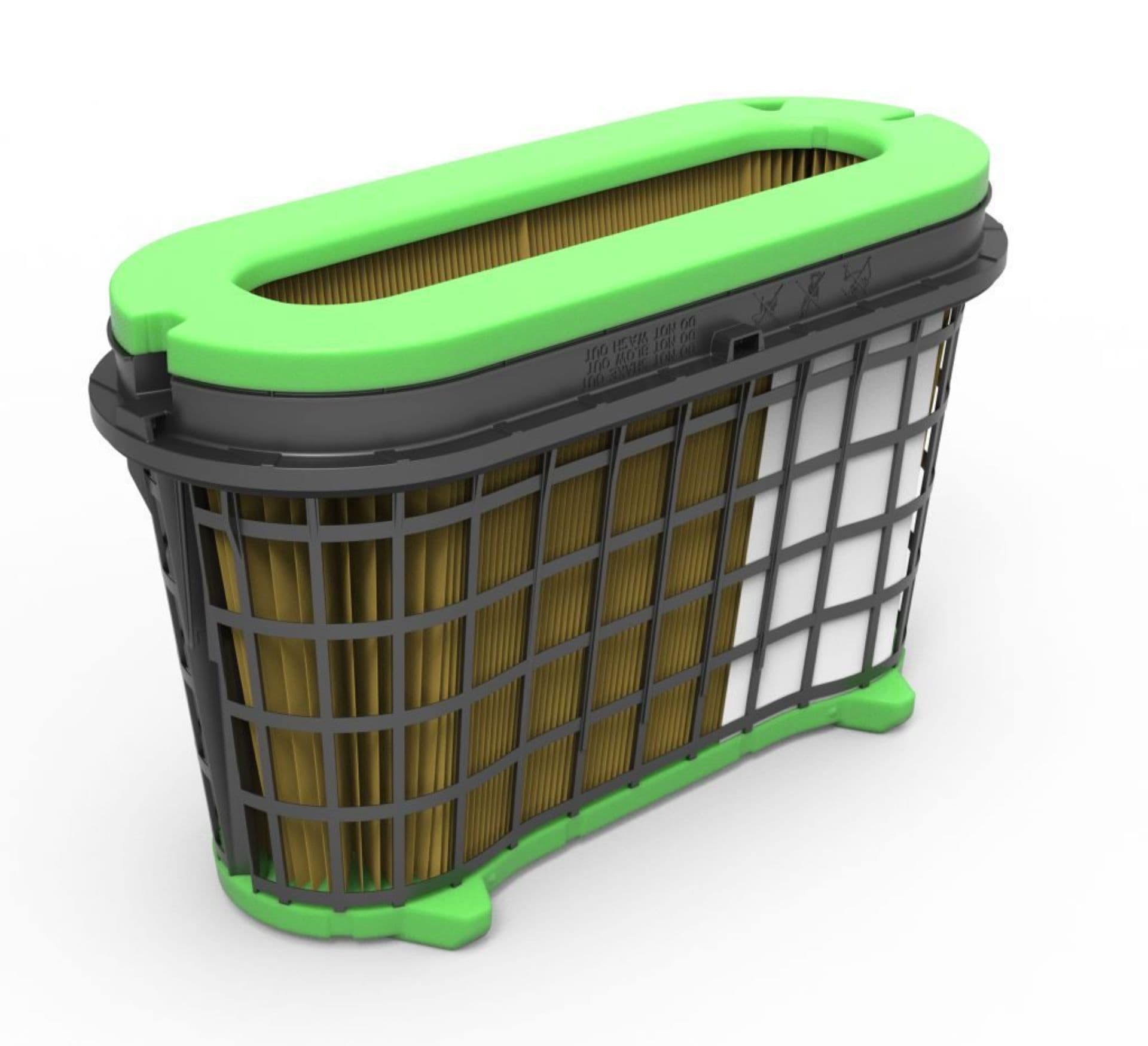
MANN+HUMMEL also has solutions for alternative drives. The new flat cathode air filter element was developed to achieve optimum air quality and performance for fuel cell systems. It efficiently removes harmful gases from the cathode air path and protects the system from contamination. The filter element consists of four stages. The first and second stage consist of a synthetic fleece for pre-separation and a cellulose particle filter element for high dust holding capacity. The third stage is an adsorption filter that efficiently removes harmful gases such as sulfur dioxide (SO2), nitrogen oxides (NOx) and ammonia (NH3). The fourth stage, a synthetic layer on the clean side, ensures high CCM requirements.
New compact filters for molecular contaminants
Under the motto ‘Cleaner Air’, MANN+HUMMEL is presenting its solutions for cleaner air to protect people, processes and the environment. For the adsorption of harmful molecular gases and volatile organic compounds, FILTECH visitors will find a variety of highly efficient adsorptive filter media and filters based on activated carbon, molecular sieves and ion exchange resins. The Carboactiv Cube Carb and Carboactiv Cube Duosorb compact filters are new developments. They filter molecular contaminants and thus improve the air in public and heavily frequented rooms, such as in commercial kitchens, airports or museums. The new molecular filters are also highly energy efficient. They can be used to replace filters in air handling units without increasing the energy consumption of the ventilation system.
Another advantage: the compact filters are classified according to the ISO 10121-3 standard. This first classification system for molecular filters helps with the selection of suitable filters for the respective application with easy-to-understand filter classes.