South Africa's automotive aftermarket is entering a more demanding phase as changing consumer expectations, emerging technologies and increasing competition reshape the industry landscape.
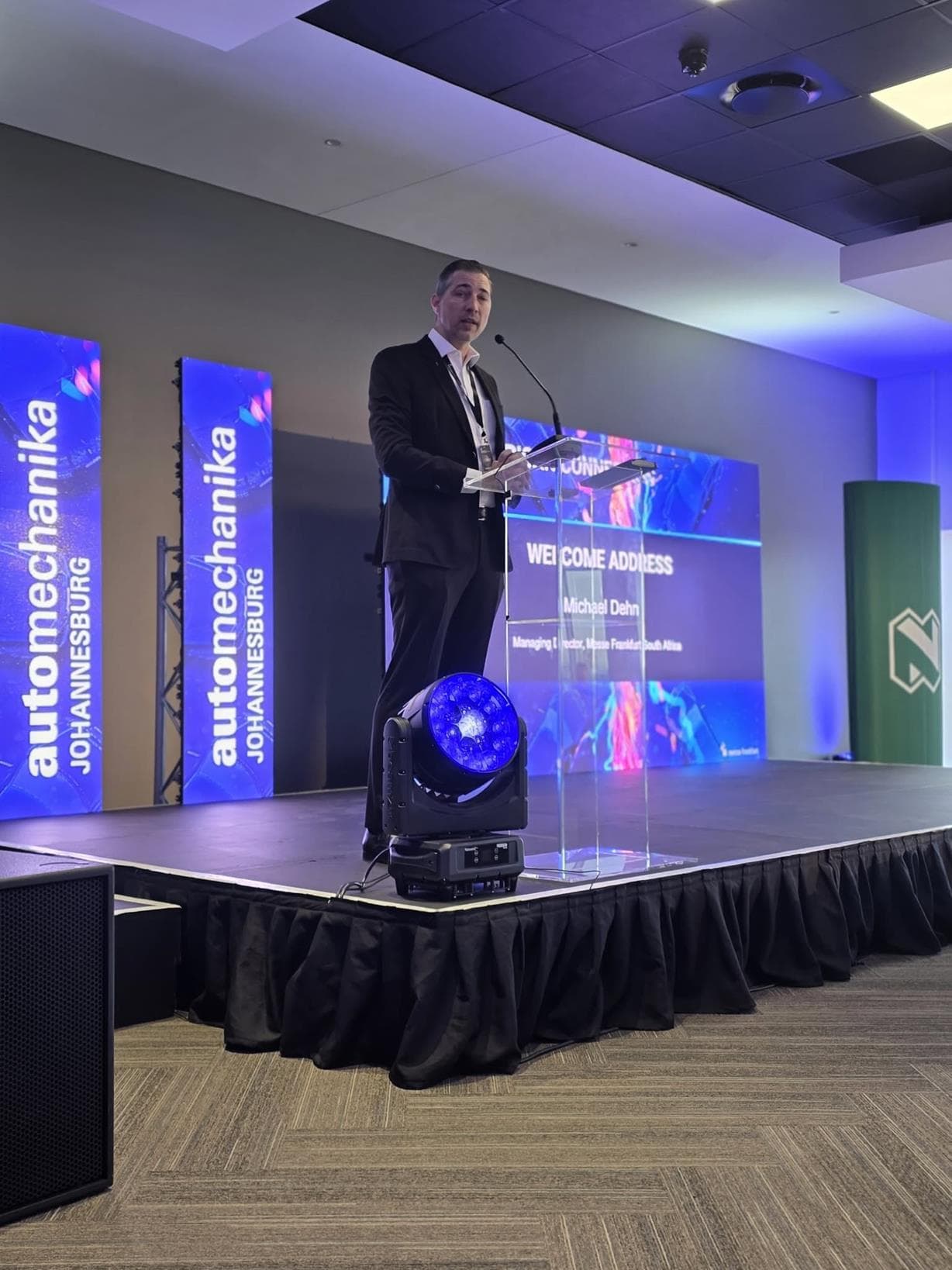
These developments were among the key discussion points during the recent Automechanika Johannesburg CEO Breakfast, hosted by Messe Frankfurt South Africa and Nedbank at the Kyalami Grand Prix Circuit as part of the 9th Festival of Motoring.
The session was facilitated by Automotive Industry Development Centre CEO Andile Africa, who highlighted the combined influence of innovation, consumer behaviour and market disruption on the aftermarket sector. He noted that businesses throughout the automotive value chain are being required to rethink customer engagement, cost management strategies and competitiveness in a rapidly evolving market.
Welcoming delegates, Messe Frankfurt South Africa Managing Director Michael Dehn drew attention to the close relationship between the Festival of Motoring and Automechanika Johannesburg. He said the Festival showcases the vibrancy of the automotive market, while Automechanika supports the industry's broader infrastructure and business ecosystem.
Industry experts explored a range of topics affecting the sector, including vehicle affordability, aftermarket localisation opportunities, artificial intelligence adoption and the broader economic outlook.
National Automobile Dealers Association National Chairperson Brandon Cohen said vehicle affordability extends well beyond the initial purchase price. Consumers are increasingly evaluating factors such as fuel consumption, insurance premiums, financing costs, maintenance expenses, reliability, parts availability and dealership support when making purchasing decisions.
Cohen explained that longer vehicle finance terms and extended ownership cycles are contributing to an ageing national vehicle parc. While this trend creates business opportunities for workshops, repairers and parts suppliers, it also increases pressure on consumers dealing with constrained household budgets. He added that dealers will need to place greater emphasis on operational efficiency, total cost of ownership and long-term customer relationships.
EY Partner Duane Newman highlighted opportunities to expand local manufacturing of key aftermarket components. He identified lead-acid batteries, automotive glass and brake pads as product categories with strong localisation potential due to their replacement frequency, market demand and manufacturing prospects.
However, Newman cautioned that local manufacturers continue to face challenges including low-cost imports, limited production volumes, investment constraints, high input costs and inconsistent enforcement of industry standards. He called for improved certification systems, support for recycling initiatives and feedstock availability, stronger export opportunities, coordinated industry demand and targeted incentives to support independent aftermarket suppliers.
Technology and digital transformation featured prominently in the discussion. Stubber CEO Werner Stucky encouraged businesses to view artificial intelligence as a practical operational capability rather than merely an information technology initiative. He outlined how AI-powered systems are being used to support customer service, sales enquiries, finance applications, service bookings, roadside assistance and administrative functions.
According to Stucky, successful AI implementation depends on organisational readiness, leadership commitment and process redesign. Companies that integrate these technologies effectively could improve customer experiences, reduce response times and expand operational capacity while maintaining service quality.
Nedbank Group Chief Economist Nicky Weimar provided an overview of the broader economic environment facing the automotive sector. She noted that manufacturers and exporters are dealing with rising operating costs, shifting trade dynamics, growing competition from lower-cost imports and currency volatility.
Although local vehicle demand has remained relatively resilient, supported by income growth and consumer access to credit, Weimar suggested that momentum could moderate toward 2027. She identified inflation, fuel price volatility, uncertainty in energy markets and potential interest-rate movements as key risks facing both businesses and consumers.
Despite these challenges, domestic demand continues to provide support to South Africa's automotive value chain and remains an important driver of industry activity.
Messe Frankfurt South Africa Business Development and Portfolio Director Tracy Gounden encouraged automotive manufacturers, distributors, dealers, workshops, service providers and industry professionals to participate in Automechanika Johannesburg 2026, scheduled to take place at Gallagher Convention Centre from 27 to 29 October 2026.
Gounden said the exhibition will provide an important platform for networking, knowledge sharing, innovation and partnership development as the industry continues to adapt to changing market conditions and emerging technologies.
The discussions at the CEO Breakfast underscored the need for collaboration, innovation and strategic investment as South Africa's automotive aftermarket navigates an increasingly complex and competitive environment.