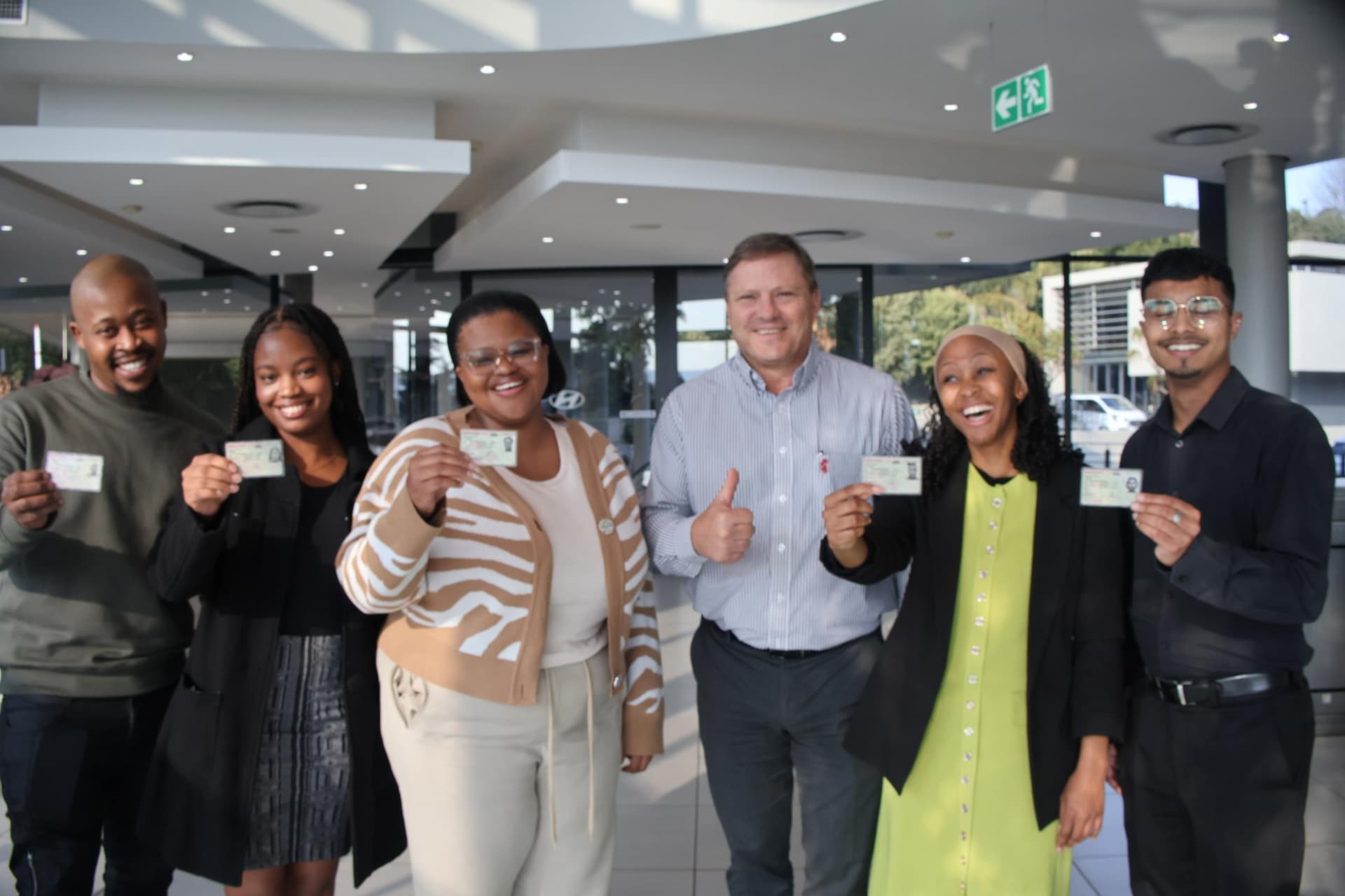
Hyundai Automotive South Africa has funded the full cost of learner’s and driver’s licences for 50 young participants in its Youth Empowerment Service (YES) programme. The support, which complements workplace training and mentorship, aims to remove financial barriers to mobility and strengthen employability prospects for South African youth.
The initiative forms part of Hyundai’s Youth Empowerment Service (YES) structured workplace development programme. The learnerships provides learners with skills training, mentorship and practical work experience across the company’s nationwide dealerships as well as its Head Office operations.
CEO of Hyundai Automotive South Africa, Stanley Anderson says the company recognised the link between mobility and economic opportunity.
“In today's competitive job market, a driver's licence has become an essential credential that can significantly enhance access to employment opportunities. By removing financial barriers to licencing, we are complementing their academic qualifications with licenses to improve their prospects for employability.”
Christine Masinga, Human Resources Director at Hyundai Automotive South Africa says the initiative strengthens the company’s investment in youth development. “Our learners are already gaining workplace exposure and mentorship from teams across Hyundai. We identified licence acquisition as another critical life skill that could significantly improve their future prospects.”
Among those benefiting from the programme is Tshiamo Sedikane who says she initially did not think getting a driver's license was a priority.
“Before joining Hyundai, I did not think obtaining a driver’s licence was a priority as I was more focusing on learning and gaining operational workplace skills. Obtaining the driver’s license has given me confidence and contributed to helping me execute my tasks efficiently,” she says.
The support comes at a time when millions of South African youths remain without driver’s licences due to financial and social barriers. The total cost to obtain a driver’s licence including driving school lessons costs, typically range from R3 000 and R4 000 for a Code B (light motor vehicle).
Transport data indicates that between 70% and 80% of young South Africans do not possess a valid driver’s licence.