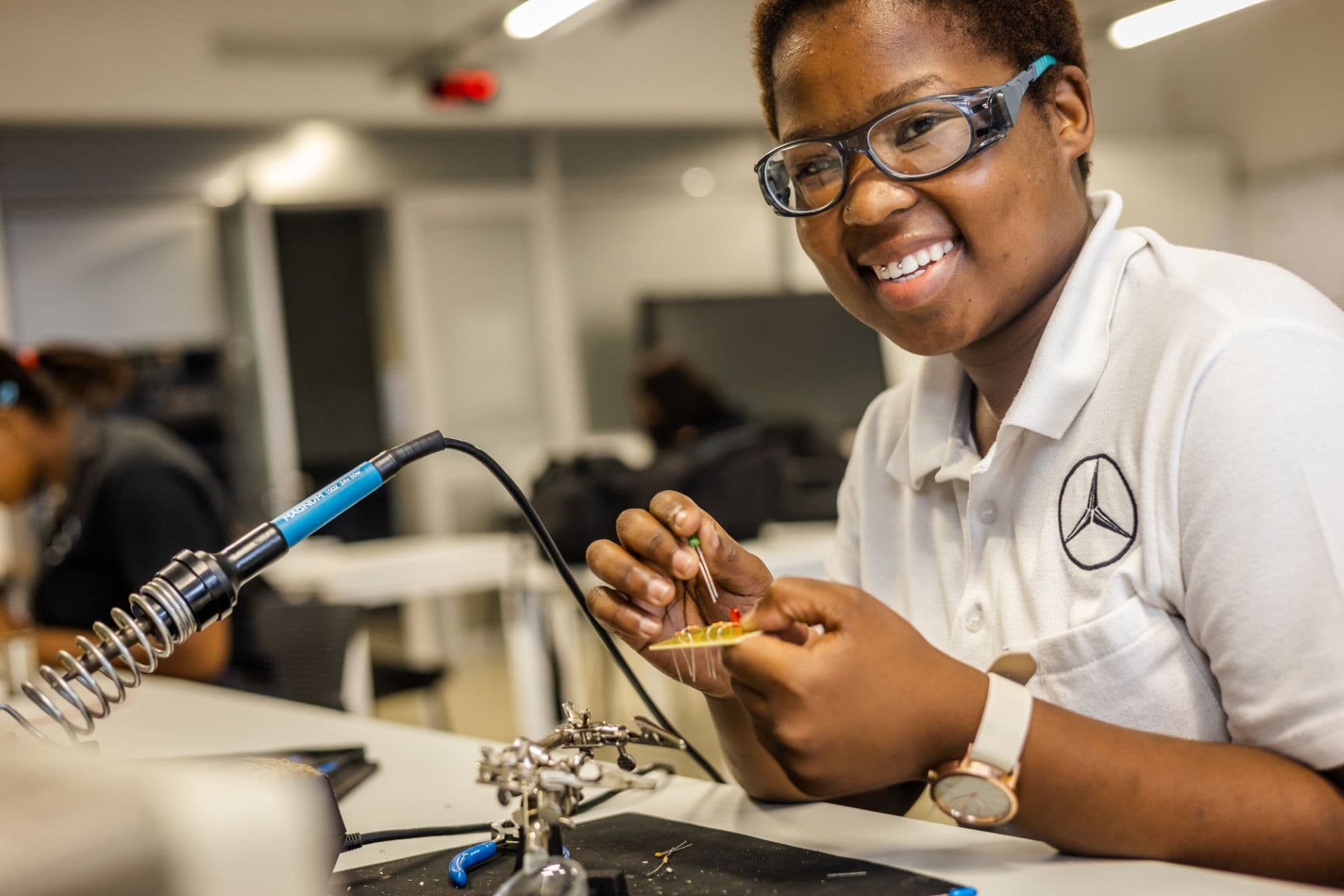
The Mercedes-Benz Learning Academy (MBLA) has set a new benchmark in South Africa’s technical training landscape by becoming the first accredited Trade Test facility for Mechatronics.
This achievement reflects both the Academy’s commitment to excellence and the growing importance of advanced interdisciplinary skills in the automotive and manufacturing sectors.
Mechatronics integrates mechanical engineering, electrical engineering, electronics, and control systems. It prepares artisans to work confidently with automated and digitally controlled technologies that are central to modern industry. Accreditation as a trade test centre means MBLA can now formally assess and certify artisans, ensuring they meet national standards and are ready for the demands of the workplace.
The qualification was developed by the National Artisan Moderation Body under the Department of Higher Education and Training. After pilot projects in 2024 and 2025, the Quality Council for Trades and Occupations granted accreditation.
MBLA was selected as the national pilot centre, a recognition of its advanced facilities and equipment. The Academy also partners with MerSETA and other government entities to deliver certified training and testing.
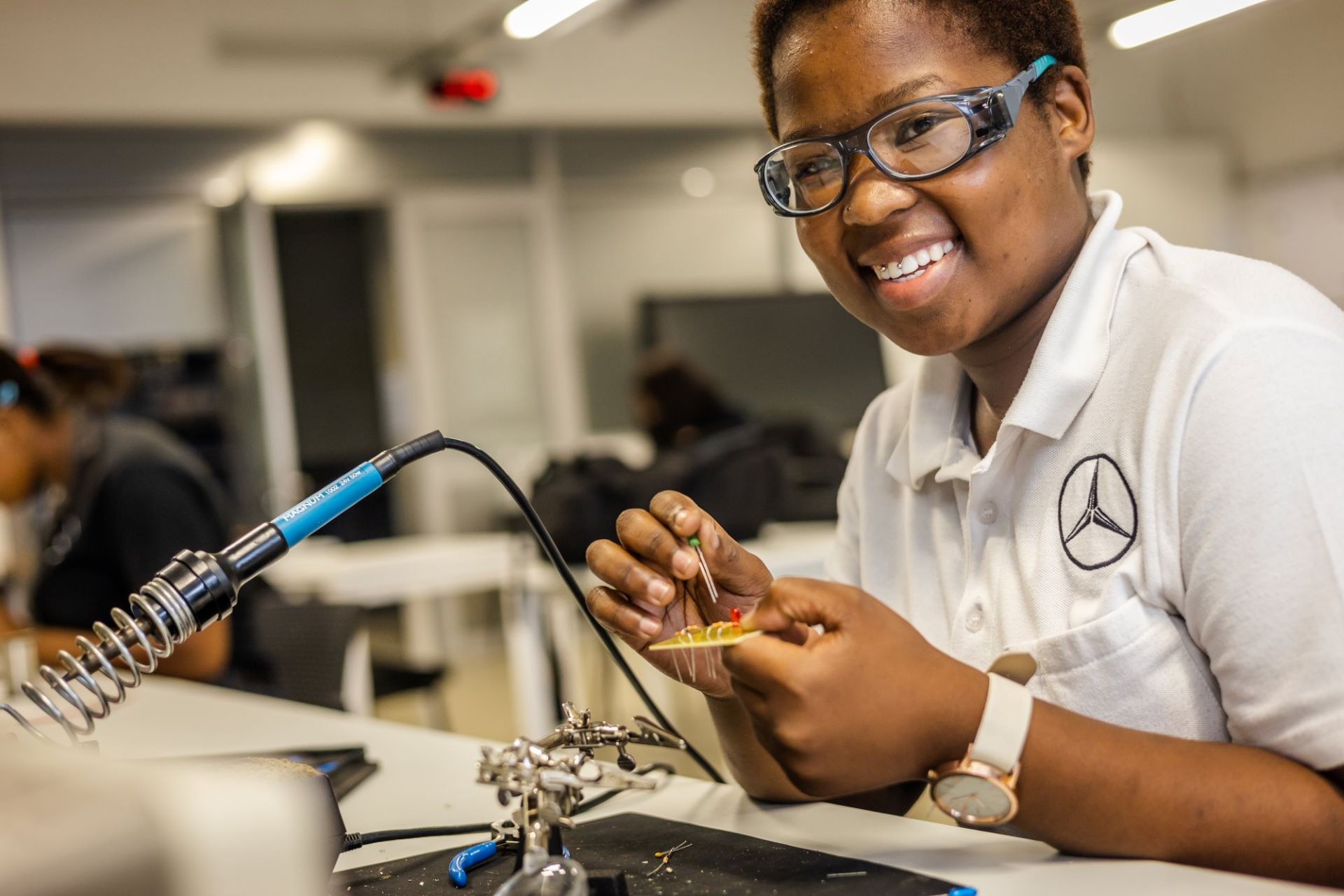
Reflecting on the milestone, Thapelo Lakaje, Head of Human Relations at Mercedes-Benz South Africa, says, “It is taking the time to prepare artisans for the real expectations of the industry. We are proud of the commitment shown by every learner and instructor at MBLA, who bring consistency, care and pride into their work each day. Through their effort, a new chapter is being shaped, and a lasting legacy is being built for the MBLA.”
Founded in 1981 as one of South Africa’s first multi-racial technical training centres, MBLA was restructured in 2016 through a Public-Private Partnership into a modern Learning Academy. It is now one of the few centres in the Eastern Cape accredited to conduct trade tests for Electrician, Millwright, Fitter, Fitter and Turner, Automotive Motor Mechanic, and Transportation Electrician qualifications.
For over forty years, MBLA has played a vital role in developing a skilled artisan workforce, supporting Mercedes-Benz South Africa’s operations while contributing to youth employment and skills development. The accreditation for Mechatronics strengthens this role, ensuring the Academy remains a leader in preparing artisans for the challenges of tomorrow’s industry.