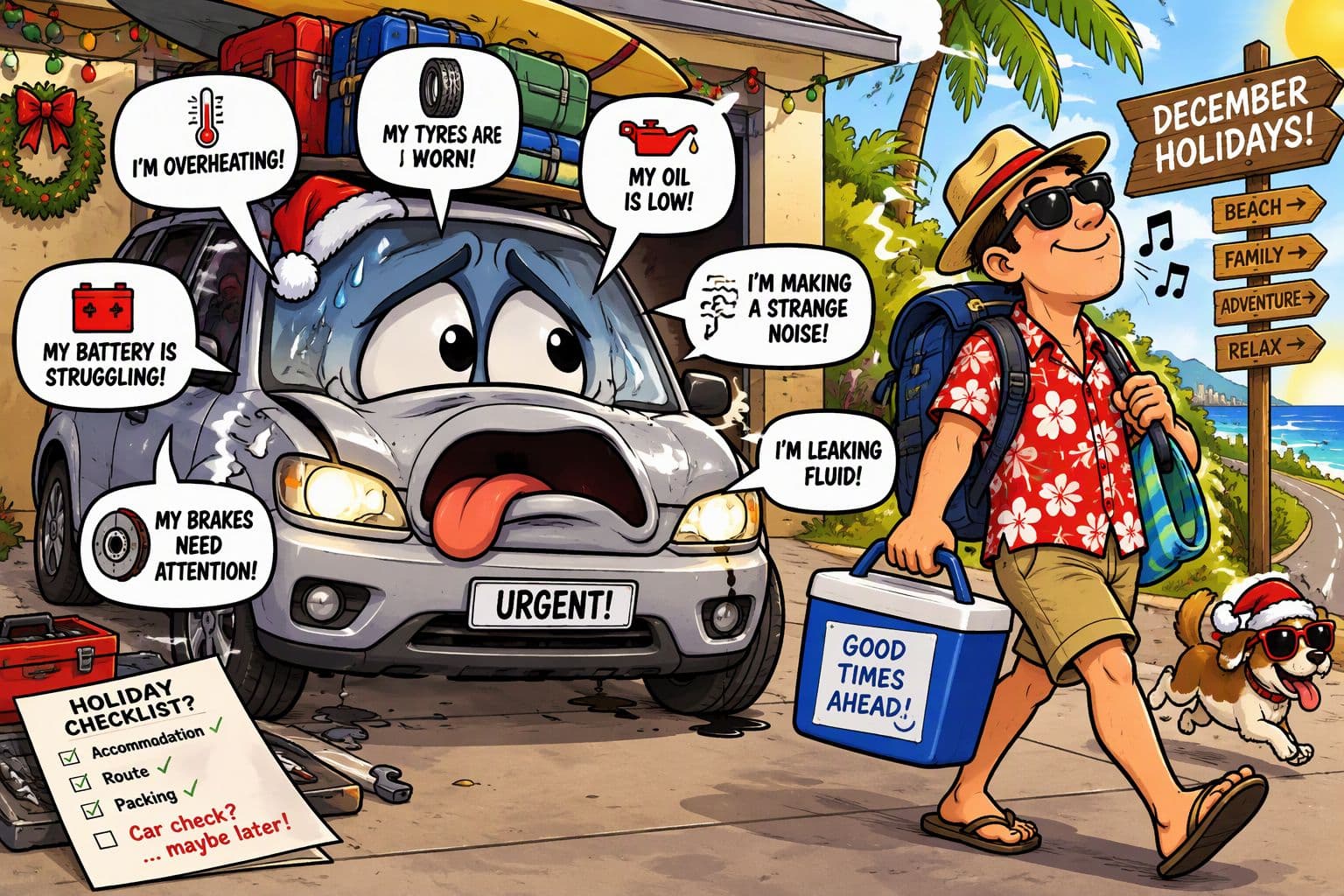
While many South Africans are focused on planning accommodation, routes and luggage for their December holidays, the condition of the vehicle making the journey often receives far less attention. According to the Motor Industry Workshop Association (MIWA), many breakdowns are preceded by warning signs that motorists either overlook or choose to ignore.
Dewald Ranft, National Chairman of MIWA, says vehicles frequently provide early indications of developing mechanical issues through changes in performance, sounds, smells or handling characteristics.
'Your vehicle does not always announce a problem by breaking down on the side of the road. In many cases, the warning signs begin as small changes that are easy to dismiss. The key is recognising those symptoms early and having them investigated before they become more serious,' says Ranft.
With the peak holiday travel period approaching, MIWA has identified several warning signs motorists should address before embarking on long-distance journeys.
Unusual smells
New or persistent odours can often be the first indication of an underlying mechanical issue. A burning smell may suggest overheating brakes, failing belts or electrical problems, while a sweet-smelling odour could indicate a coolant leak. A strong fuel smell should always be investigated promptly as it may point to a fault within the fuel system.
If an unfamiliar smell continues to occur, motorists should arrange for a professional inspection rather than assuming the issue will disappear on its own.
Unfamiliar noises
Most vehicle owners become accustomed to the normal sounds their vehicle produces. New squeaks, rattles, grinding sounds or engine knocking noises often indicate that components require attention.
Brake squeal can signal worn brake pads, while grinding or knocking sounds may point to more significant mechanical concerns that should be addressed immediately.
New vibrations
Vibrations felt through the steering wheel, shaking at certain speeds or pulsing during braking should never be ignored. Such symptoms can result from wheel balancing issues, tyre damage, worn suspension components or braking system faults.
Left unresolved, these issues may compromise vehicle safety, handling and overall driving comfort.
Vehicle pulling to one side
A vehicle that consistently drifts to the left or right while travelling on a straight road may require mechanical attention. Common causes include incorrect wheel alignment, uneven tyre pressures, suspension problems or braking system defects.
In addition to affecting handling, these problems can accelerate tyre wear and increase operating costs.
Dashboard warning lights
Modern vehicles are equipped with sophisticated monitoring systems designed to alert drivers when faults occur. Warning lights such as the engine management indicator, battery warning light, oil pressure alert or coolant temperature warning should never be ignored.
Some warnings require immediate action. Low oil pressure or excessive engine temperature, for example, can lead to severe engine damage if the vehicle continues to be driven.
Changes in braking performance
Any noticeable change in braking behaviour should be regarded as a safety concern. A soft brake pedal, increased stopping distances, vibrations during braking or unusual noises may indicate that the braking system requires urgent attention.
Brakes remain one of the most important safety systems on any vehicle, making prompt professional assessment essential.
Tyre condition remains critical
Tyres should receive special attention before embarking on a holiday trip. Uneven tread wear, bulges, cuts, cracks or repeated pressure loss may indicate underlying issues that require attention.
Motorists should check tyre pressures, inspect tread depth and ensure the spare wheel is roadworthy before setting off.
Avoid becoming accustomed to faults
According to Ranft, one of the most common mistakes motorists make is adapting to a problem rather than addressing it.
'Many motorists gradually become accustomed to vehicle faults. A vibration becomes normal, a warning light is ignored because the vehicle still drives, or an unusual noise fades into the background. Unfortunately, that approach often allows minor issues to develop into major failures.'
He recommends having any unusual symptoms investigated by a reputable accredited workshop before travelling.
'Before undertaking a long-distance journey, motorists should have any unusual vehicle symptoms checked by a reputable accredited workshop. A pre-trip inspection is also one of the most effective ways to identify potential problems that may not yet be apparent to the driver,' concludes Ranft.
MIWA believes a proactive inspection before the festive season can help motorists avoid unnecessary breakdowns, reduce repair costs and enjoy safer, more reliable holiday travel.