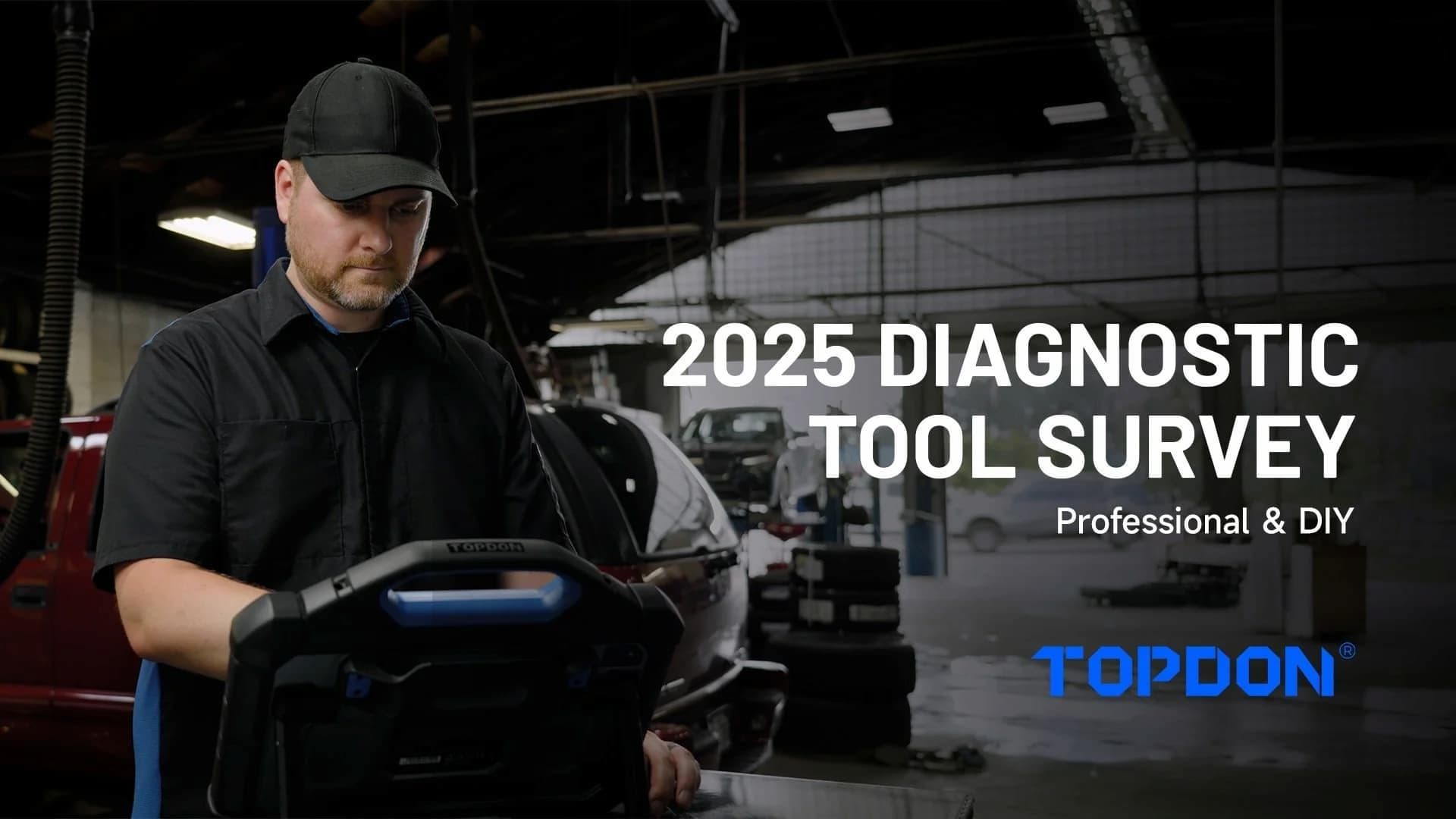
A September 2025 survey conducted by TOPDON USA of over 3 000 automotive technicians and DIY mechanics in North America reveals significant challenges in repairing increasingly complex vehicles. The survey included 47% professional technicians and 53% DIY mechanics.
TOPDON USA, headquartered in New Jersey, is a leading provider of advanced automotive diagnostic tools and equipment.
Among professional technicians surveyed, 66% have over 10 years of experience and 51% hold ASE certification. Despite this expertise, 73% identified limited access to original equipment (OE) manufacturer data as their primary challenge. This represents a shift from skill-based difficulties to access-based obstacles.
Vehicle network and communication systems were cited by 67% of professionals as the most difficult area to diagnose. For hybrid and electric vehicles specifically, 39% reported challenges with battery packs, inverters, and isolation faults, while 33% struggled with Advanced Driver Assistance Systems (ADAS).
The factors influencing diagnostic tool purchases are evolving. Contrary to expectations that price drives decisions, accuracy and ease-of-use emerged as the top considerations for professional technicians. When it comes to desired features, 68% want more comprehensive OEM-level diagnostics and coverage, 46% seek wiring diagrams and guided repair information, and 45% prioritise faster scan speeds.
Technicians increasingly rely on YouTube (77%) and manufacturer websites (57%) to learn about new diagnostic tools, indicating a shift in how product information is consumed.
Industry Trends and Future Concerns
Looking ahead, 81% of respondents identified OEM-secured gateways and encrypted vehicle systems as a major trend shaping diagnostic tools. The growth of electric and hybrid vehicles requiring specialised diagnostic equipment was noted by 55%.
The survey found that 85% of DIY mechanics use diagnostic tools to assess whether they can complete repairs themselves, with 81% wanting the ability to read and clear trouble codes. Additionally, 60% use these tools to verify repair shop estimates and avoid overcharges.
Common DIY repairs include engine diagnostics, oil changes, brake work, and electrical issues, identified by nearly 90% of respondents. However, only 49% use full-featured scan tools. Key frustrations include lack of support or tutorials (49%) and difficulty understanding diagnostic codes even after reading them.
Interestingly, 74% of DIY mechanics prioritise features and functions over brand reputation and price when selecting diagnostic tools, suggesting a shift towards capability-based purchasing decisions rather than brand loyalty.
The survey indicates that vehicle diagnostics are transitioning from standalone tools to integrated systems, with the industry moving towards more connected and data-driven solutions to address the growing complexity of modern vehicles.