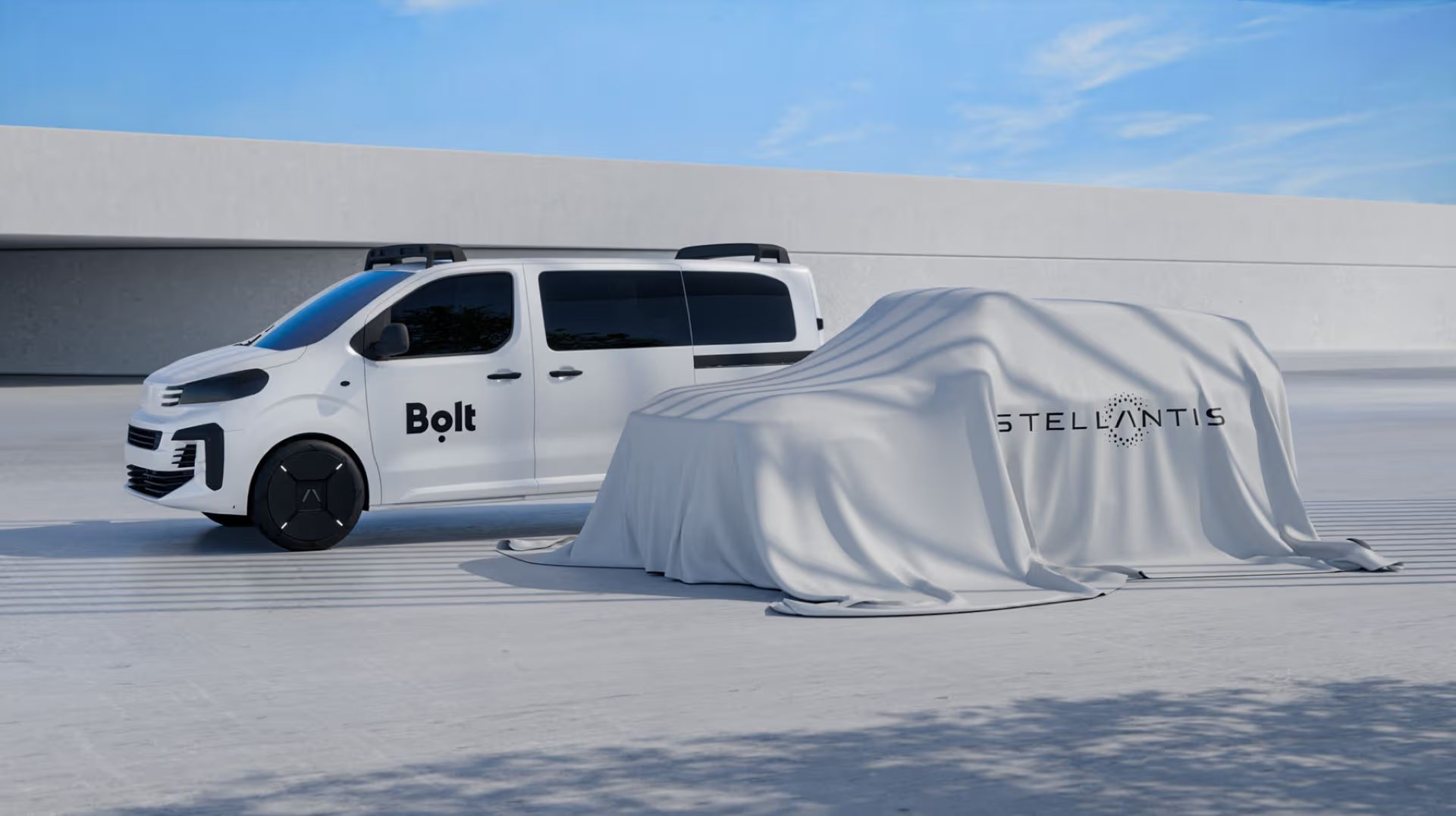
Stellantis and Bolt have signed a major partnership to work together on Level 4 autonomous vehicles with the aim of bringing driverless mobility to European cities. The agreement signals a clear intention by both companies to speed up the development and deployment of fully autonomous vehicles for shared transport, using Stellantis technology and the Bolt mobility platform.
Bolt is an Estonian based global mobility operator that runs services in more than 600 cities across over 50 countries. Its offering ranges from ride hailing and micromobility to food and grocery delivery. The company has more than 200 million customers and intends to integrate autonomous vehicles into its existing services once the technology reaches commercial readiness.
The collaboration rests on Stellantis AV Ready Platforms, including the eK0 medium size van and the STLA Small platform. These platforms have been designed for scalability and cost efficiency and include a full sensor suite, high performance computing and built in redundancies. Stellantis believes this engineering approach offers operators one of the most competitive solutions available.

Both companies expect to begin real world testing in Europe from 2026. The intention is to phase in the technology gradually, starting with prototypes and pilot fleets before moving to volume production. Initial industrial scale up is targeted for 2029. Throughout the process both partners will work with European regulators to ensure compliance with safety, cybersecurity and data protection requirements.
Stellantis CEO Antonio Filosa said the platforms were created to offer flexibility and to provide the best possible experience for European customers. Bolt founder Markus Villig said the partnership brings together companies that understand the specific needs of Europe and can tailor an autonomous service that millions of people will be able to use.