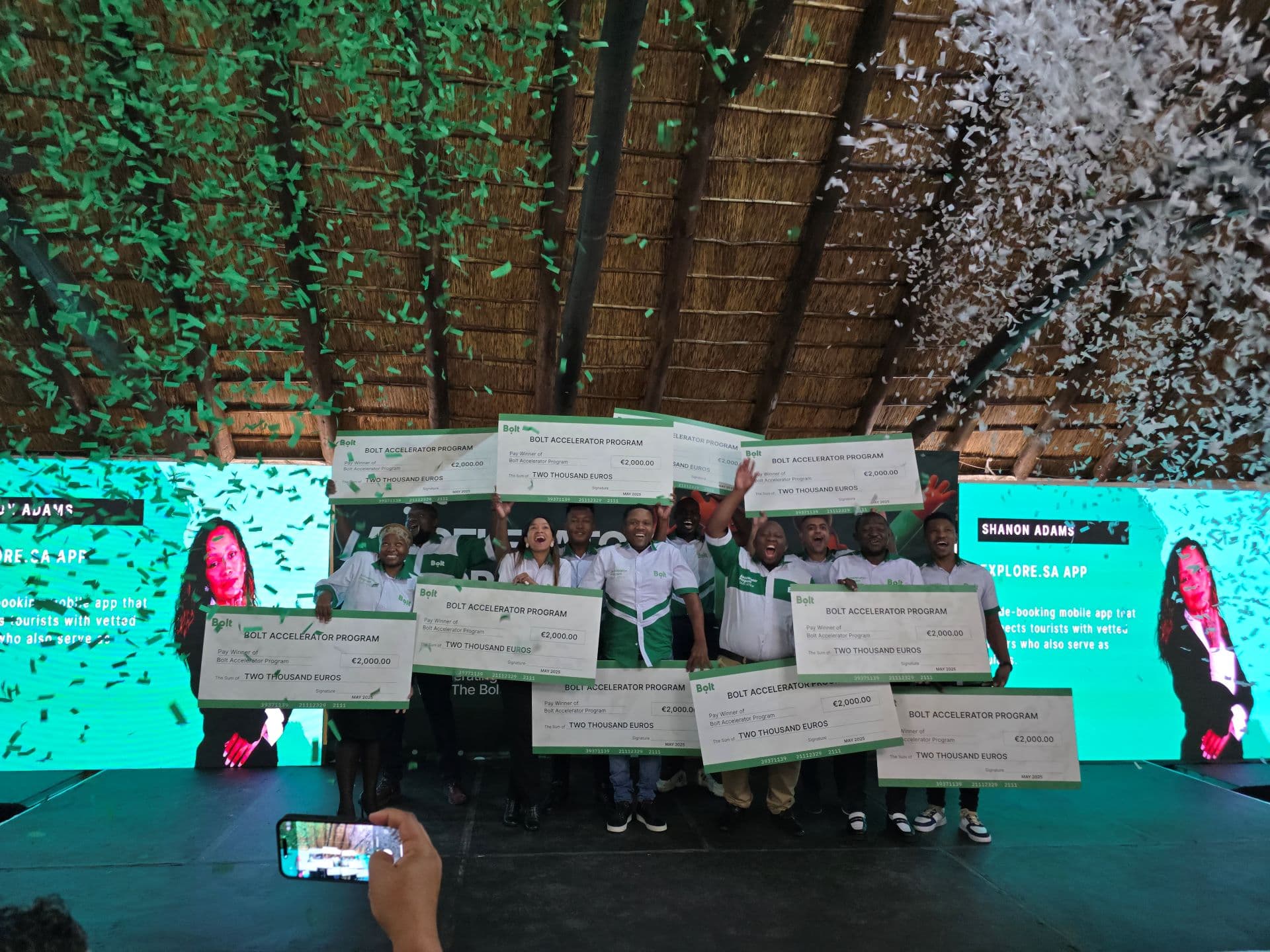
South Africa hosted its first Bolt Accelerator Program (BAP) Awards this morning at the Garden Venue Hotel in Johannesburg, marking a significant milestone in promoting innovation and entrepreneurship among ride-hailing drivers.
After successful rollouts in Nigeria, Kenya, and Ghana, Bolt expanded the BAP to South Africa to empower local drivers and their families. The initiative offers seedfunding, mentorship, and training to support business ideas that tackle real-worldmobility issues. The program promotes sustainability, inclusive transportation, andpeople-first urban planning.
Lerato Motsoeneng, Bolt’s Senior General Manager for South Africa, emphasizedthe company’s commitment to its drivers: “The BAP is more than a businessinitiative—it’s a promise to grow with our partners, and help South Africa thrive.”
Nearly 500 applications poured in, and 100 individuals were selected for the nextphase. They underwent a 10-week hybrid training and mentorship program facilitated by Pranary, a hands-on business school. The curriculum included expert-ledworkshops, strategic mentorship, and access to AI-powered learning tools.
Participants showcased their ventures on Business Pitch Day. Twenty finalists wereshortlisted, and the top 10 received €2,000 (around R40,000) in seed funding andcontinued mentorship. The winners are:
Pranary CEO Sandras Phiri praised Bolt's forward-thinking support, noting, “It’sincredible to see companies like Bolt help drivers become entrepreneurs.”
To qualify, applicants had to be Bolt drivers with at least 100 completed trips or direct family members over 18, reside in South Africa, and be available for training. They also needed to propose viable business solutions to mobility challenges.
Supported by the Gauteng Department of Economic Development and the Department of Transport, the program is fostering a new wave of innovation withinSouth Africa’s transport sector, turning ride-hailing into a catalyst for entrepreneurship.