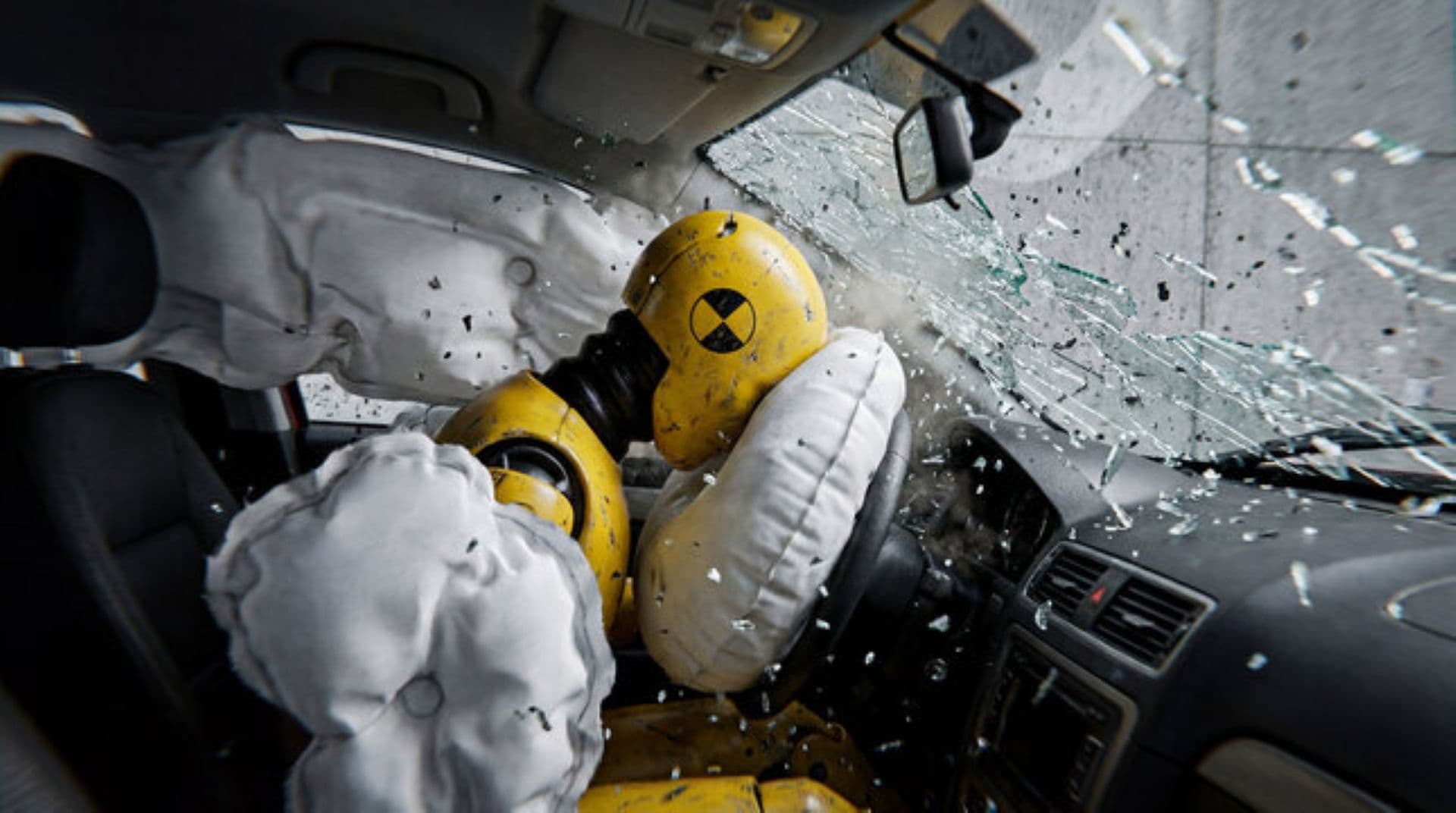
Recent announcements from Toyota and Honda show how manufacturers are trying to tackle both crash survivability and crash prevention, while regulators and independent researchers continue to highlight where the biggest risks remain.
At Toyota’s Collaborative Safety Research Center, the emphasis is on linking academic science with practical engineering. The company has launched 10 new projects with partners including the University of Virginia, Massachusetts Institute of Technology, University of Michigan and Purdue University. The work spans behavioural safety, crash avoidance and passive protection, with topics ranging from adaptive driver interfaces to pedestrian and cyclist detection, as well as the relationship between road type, speed choice and crash risk.
A key part of this research is THUMS, Toyota’s virtual human body model, which allows scientists to simulate how different parts of the body respond to impact. These digital tools cannot replace physical testing entirely, but they do make it possible to run far more scenarios and study a wider range of potential injuries than traditional methods alone.
Honda, meanwhile, is putting equal weight on behaviour as well as vehicle design. Its Honda Safety Driven initiative has now reached more than one million students, reflecting the company’s view that technology on its own will not eliminate road deaths. The programme is aimed particularly at younger road users, a significant concern given that nearly one-third of annual US traffic fatalities involve drivers under 25, according to Honda.
The wider safety picture remains sobering. NHTSA reported 39,254 traffic deaths in the United States in 2024, followed by an estimated 36,640 in 2025, a notable improvement but still a very high toll. Independent research from IIHS also suggests that some pedestrian automatic emergency braking systems still struggle in the dark, and can even be confused by reflective clothing designed to make people more visible.
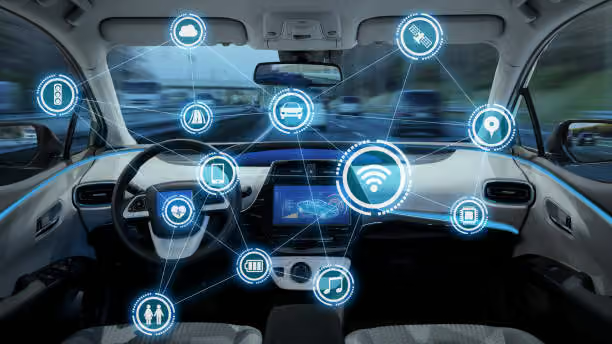
Taken together, the latest work suggests that the future of crash research lies not in any single breakthrough, but in the combination of better data, more realistic simulation, improved sensors and a sharper understanding of human behaviour.