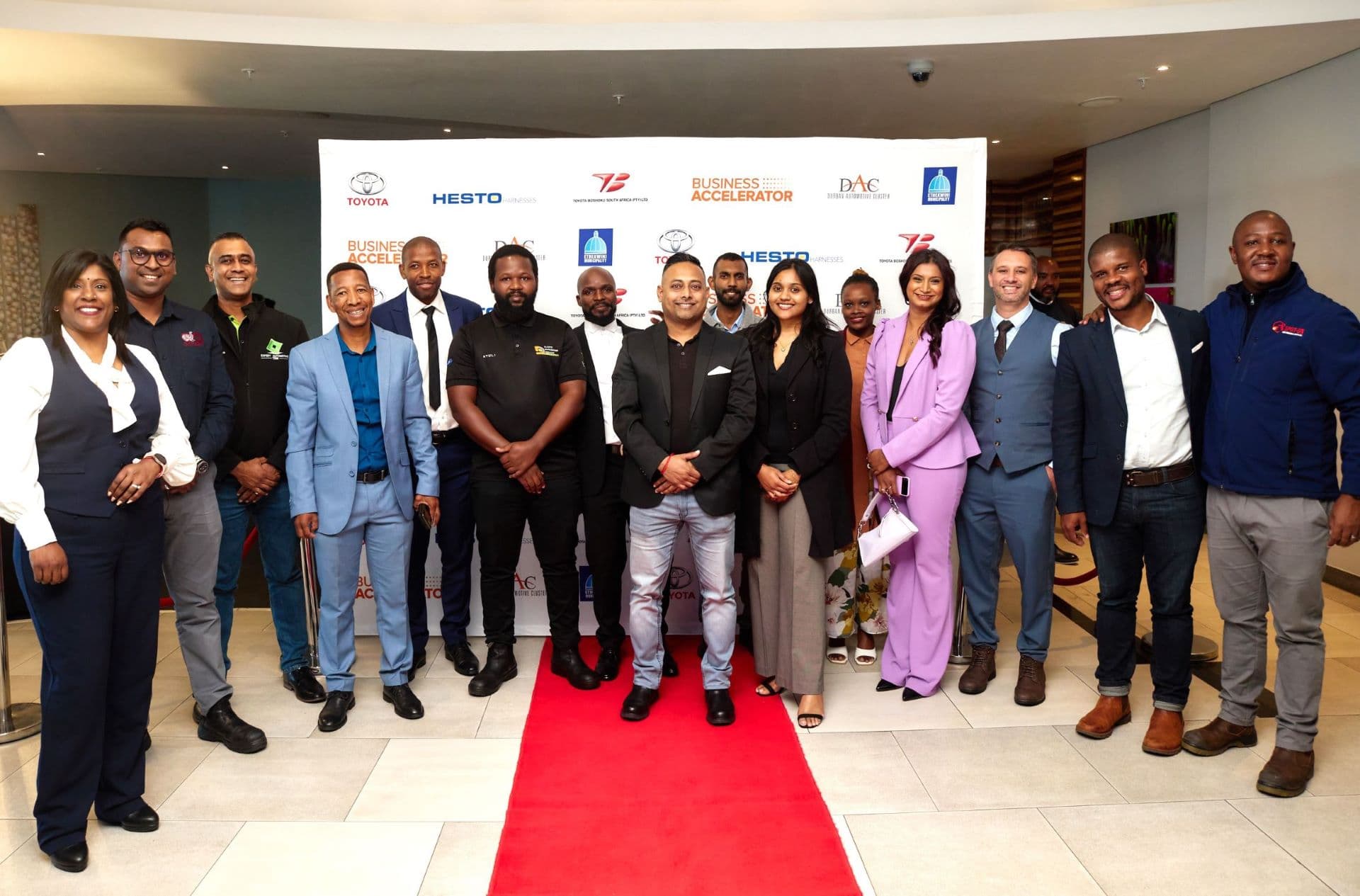
Toyota South Africa Motors (TSAM) has reaffirmed its commitment to strengthening the country’s automotive repair and supply chain through the launch of the 2025 Durban Automotive Cluster (DAC) SME Accelerator.
This public-private partnership with the eThekwini Municipality aims to nurture high-potential, black-owned Small and Medium Enterprises (SMEs) and create a more resilient, inclusive automotive ecosystem.
The programme is a strategic step towards developing competitive Tier 2 and Tier 3 suppliers, directly supporting the goals of the South African Automotive Masterplan (SAAM) 2035. By promoting localisation, transformation and skills development, the initiative helps ensure that the country’s repair and manufacturing sectors are ready to meet future challenges.
Andrew Kirby, President and CEO of Toyota South Africa Motors, says: “At Toyota South Africa Motors, we believe that inclusive growth is not just a goal but a responsibility. The DAC SME Accelerator is a strategic platform to empower black-owned businesses, strengthen our local supply chain and ensure that transformation is embedded in the DNA of our industry.”
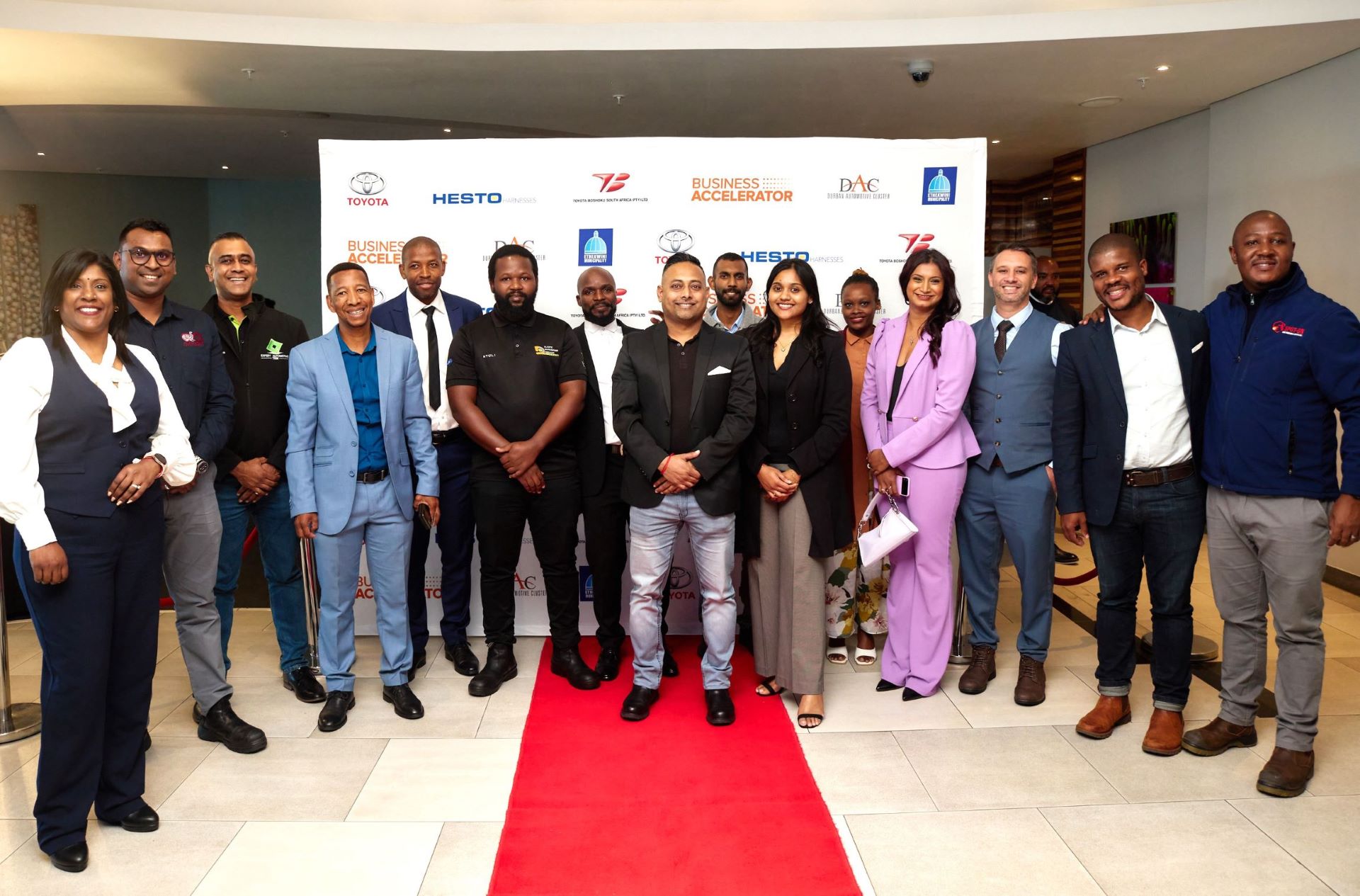
The programme encourages collaboration between established Tier 1 suppliers and emerging enterprises, ensuring that experience and expertise are shared across all levels of the industry. Participating Tier 1 suppliers are key to the success of the Accelerator, mentoring new entrants and aligning their own localisation and supplier development goals with Broad-Based Black Economic Empowerment (B-BBEE) strategies.
Meghan King, Chief Facilitator of the Durban Automotive Cluster, says: “The DAC SME Accelerator is more than a programme – it’s a catalyst for inclusive growth and industrial resilience. By empowering black-owned SMEs, we’re not only diversifying the supply chain but also building a future-ready automotive sector.”
In 2024, the Accelerator attracted over 100 applications, showing its growing influence in advancing supplier capability, competitiveness and resilience. Selected SMEs undergo intensive preparation, culminating in a “Dragons’ Den” event where they pitch to potential customers and industry leaders.
“We are proud to support a programme that not only develops supplier capability but also creates meaningful opportunities for long-term partnerships and sector-wide resilience,” Andrew concludes.