Hyundai Motor Company and Kia Corporation have revealed Vision Pulse, an innovative safety system designed to detect potential hazards even when they are hidden from a driver’s view.
The technology, which uses ultra-wide band (UWB) signals, can identify the precise position of nearby objects in real time, helping to prevent collisions and enhance overall road safety.
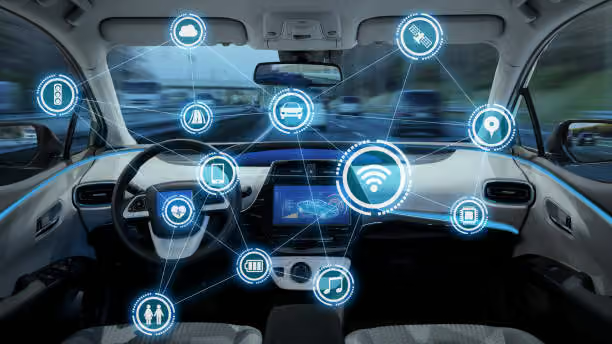
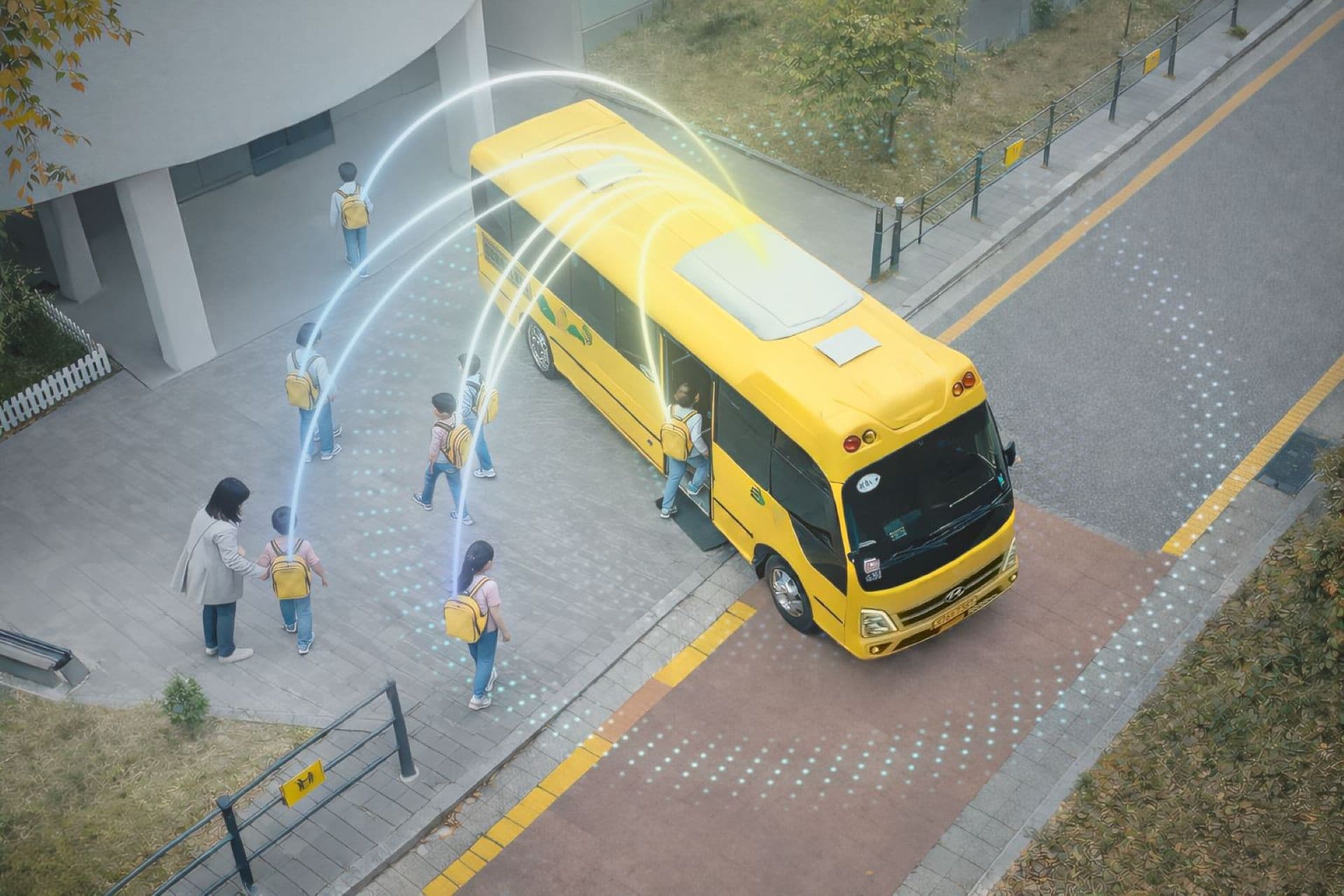
At the heart of Vision Pulse is a network of UWB modules fitted to vehicles. These modules communicate with UWB-enabled devices—such as certain smartphones, wearables, and tracking tags—to calculate the relative position of vehicles, cyclists, or pedestrians with remarkable precision. If the system identifies a likely collision scenario, it immediately issues alerts, giving drivers crucial extra moments to react.
Vehicles already equipped with Hyundai and Kia’s Digital Key 2 include the required UWB modules, meaning no additional hardware is needed for compatibility.
A Step Beyond Conventional Blind-Spot Technology
Traditional blind-spot monitoring tools often rely on fixed sensors or slower communication methods, which can limit their effectiveness in fast-moving or complex environments. Vision Pulse overcomes these shortcomings by using rapid UWB radio transmissions, providing both accuracy and cost-efficiency while reducing dependence on expensive sensors such as LiDAR and radar.
Operating across GHz bandwidths, UWB offers strong resistance to interference and can penetrate obstacles, allowing Vision Pulse to function reliably at urban junctions and in poor weather or low-light conditions. The system delivers accuracy within 10 centimetres over distances up to 100 metres and communicates in as little as one millisecond.
Hyundai and Kia have also integrated predictive algorithms capable of tracking several fast-moving objects simultaneously, making the technology suitable for busy real-world environments.
Expanding Use Beyond Everyday Driving
Vision Pulse shows strong potential outside traditional automotive use. In industrial settings, it can help prevent accidents between workers and machinery, while in emergency situations, it may assist in locating people trapped under rubble.
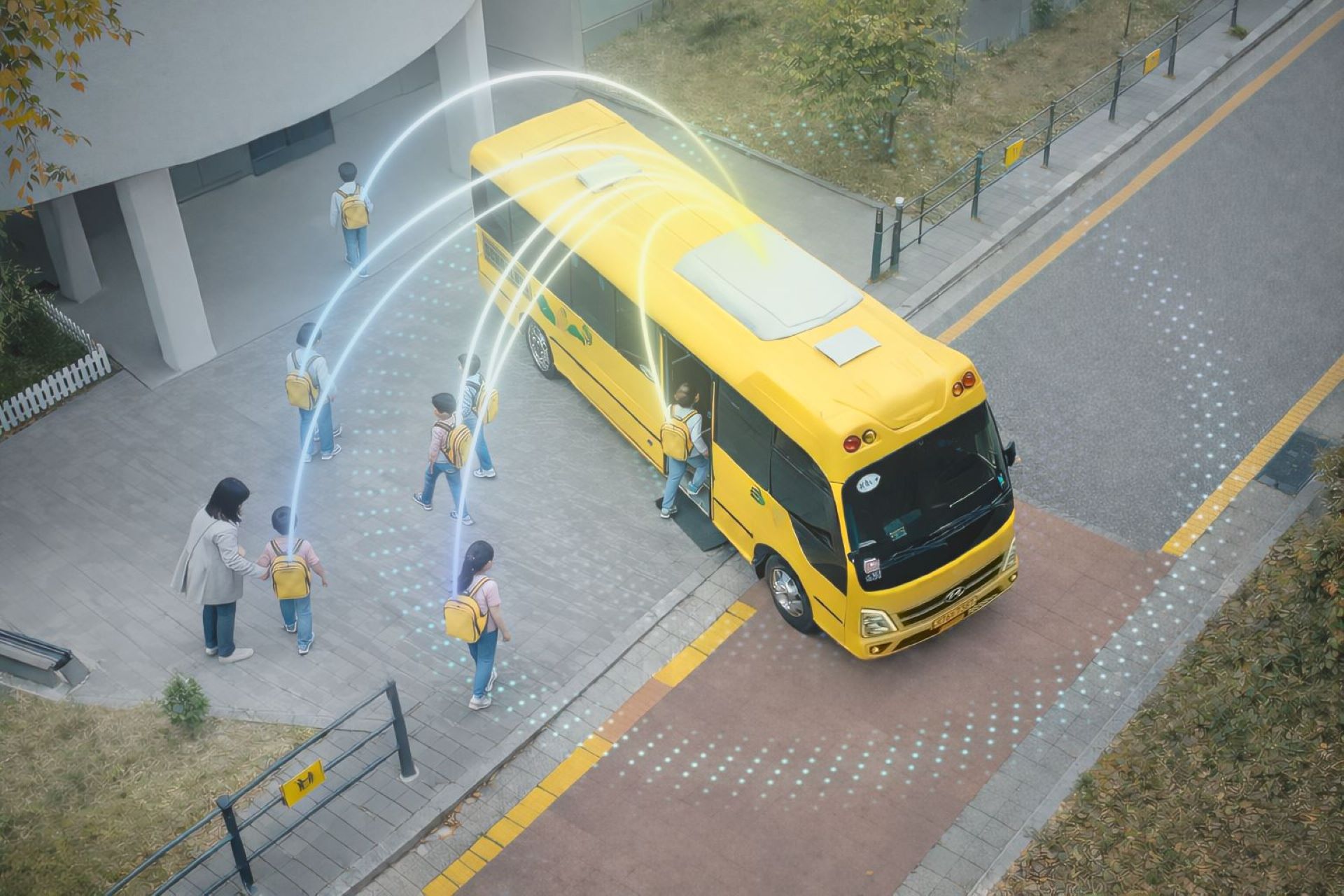
A recent campaign film, Sight Beyond Seeing, demonstrates the system in action on school buses, accompanied by child-friendly UWB keyrings shaped like guardian angels, which double as nightlights to encourage regular charging.
Pilot programmes are already under way, including trials at Kia’s PBV Conversion Centre and the Busan Port Authority, where the technology is being tested in active industrial environments.