The future of South Africa’s automotive industry will be defined not only by new energy vehicles (NEVs) but also by the readiness of its workforce.
A joint study by NAACAM and the ILO warns that as the country transitions away from internal combustion engines, an estimated 8 200 direct jobs could be at risk over the next decade.
The report stresses that many of the skills currently used in component production will remain relevant, but they must be complemented by expertise in robotics, artificial intelligence, advanced manufacturing, green production techniques and specialised NEV technologies. It concludes that South Africa’s skills development ecosystem is only at a basic level of readiness and requires significant investment to meet future industry demand.
“Whether that transition results in industrial growth or manufacturing decline will depend on the policy choices and investments made today,” the study notes. It also finds that while South Africa has manufacturing capability that could be adapted to produce priority NEV components, stronger incentives and accelerated training will be essential.

Stakeholder consultations revealed that many local manufacturers are not yet planning to diversify into NEV component production, citing policy uncertainty and limited investment support. The report recommends six priority actions, including workforce skills audits, expanding accredited training programmes, strengthening the technical education pipeline and providing reskilling opportunities for workers displaced during the transition.
The emphasis on training and repair industries is clear: without a skilled workforce, South Africa risks falling behind in the global automotive shift. NAACAM and the ILO argue that preparing technicians, engineers and repair specialists for NEV technologies will be critical to sustaining employment and ensuring competitiveness.
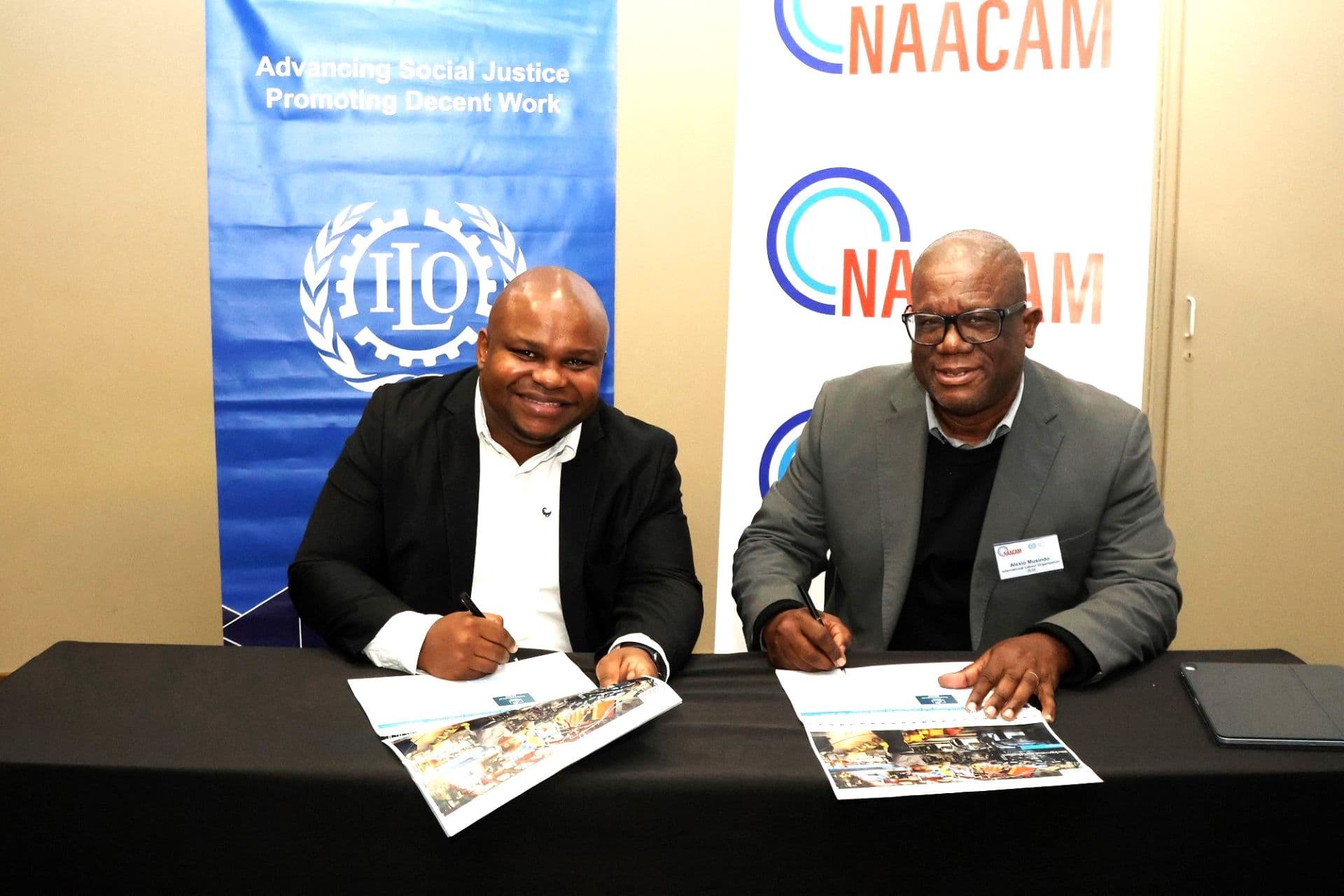
NAACAM’s Ndu Chala and ILO’s Alexio Musindo highlighted that coordinated investment in skills development will determine whether South Africa can seize the opportunities of cleaner mobility.
The report concludes that the country must act now to ensure its workforce is equipped for the technologies of tomorrow.