When Electrocoat entered a new chapter of ownership in 2023, it represented more than an internal restructuring — it marked a significant transformation enabled by the Automotive Industry Transformation Fund (AITF). According to Electrocoat director Lionel Arnold, the process was thorough, collaborative and ultimately essential in positioning the business for long-term sustainability within South Africa’s automotive supply chain.
Electrocoat was originally founded by Joe Bloom and remained a 100% white-owned business for decades. After Bloom’s retirement, ownership transferred to his daughter, but the company struggled to maintain its footing. One of its largest clients, Autocast South Africa, recognised the importance of protecting local coating capacity and approached Arnold and his partners to consider taking over the business. This set in motion a process that would soon involve the AITF, with Isuzu stepping in as the required OEM sponsor — a key step for any AITF-supported transaction.
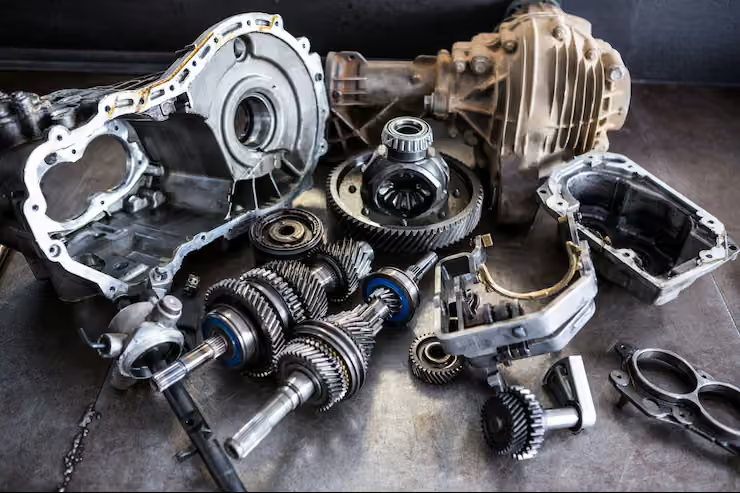
At the heart of Electrocoat’s importance to the industry is its technical role. The company specialises in electro-deposition coating, commonly known as e-coating — a precise process where automotive components are immersed in an electrically charged paint bath. This ensures even, corrosion-resistant coverage, including on complex surfaces, making it an essential step in preparing metal parts used by major vehicle manufacturers. As one of only a handful of South African firms offering this service at scale, the loss of Electrocoat would have created a significant gap in the local supply chain.
Once Isuzu approved the takeover proposal, documentation was submitted to the AITF, which initiated a detailed due-diligence process. Arnold recalls that AITF officials reviewed infrastructure, plant condition, personnel skills and operational readiness, and conducted site visits to verify the viability of the transaction. Although the AITF was still refining its internal processes at the time — creating what Arnold describes as some “teething problems” — the experience was ultimately smooth. The fund approved financing in December 2022, and the takeover was completed in April 2023, giving the new ownership team clarity on the improvements needed for stability and future growth.
The AITF itself, established in 2020 by seven major OEMs operating in South Africa, is designed precisely for interventions like this. Its mandate is to accelerate transformation by supporting black-owned or black-empowered businesses through financing, skills development and access to automotive procurement networks. By lowering historical barriers to entry, the fund plays a pivotal role in diversifying and expanding the automotive value chain. In only a few years, it has distributed hundreds of millions of rands to emerging suppliers, strengthening localisation and promoting inclusive growth.
Electrocoat’s journey demonstrates how the AITF can function effectively when OEMs, suppliers and funders collaborate with a shared goal. The transaction preserved a critical industrial capability, advanced transformation, and positioned the company for renewed competitiveness. As Arnold notes, if South Africa is serious about expanding black participation in key industrial sectors, the AITF model offers a practical blueprint.