
Plastics have helped make cars lighter, quieter and safer, but they are becoming a pressure point at end of life.
Modern vehicles contain a growing mix of polymers, foams, coatings and fibre-reinforced composites that are hard to identify, separate and recycle once a car is written off. For repairers, this matters because the materials that arrive in the workshop today are increasingly the materials regulators and manufacturers will expect to recover tomorrow.
In Europe, the direction of travel is clear. A new EU regulation on vehicle circularity and end-of-life vehicles has been provisionally agreed, introducing mandatory recycled-content targets for plastics in new vehicles, with staged requirements that rise over time. Critically, part of that recycled content must come from post-consumer sources, including end-of-life vehicles, rather than only factory scrap. The intent is to pull higher-quality material out of the shredder stream and back into automotive-grade applications.
That is a tall order. EU research has highlighted that only a small fraction of plastics used in car manufacturing currently find their way into the recyclates market, while plastics recovered from end-of-life vehicles are often downcycled, incinerated or landfilled. Plastics also represent roughly a fifth of a modern vehicle’s weight, so the volume at stake is not trivial. As electric vehicle production rises, lightweight polymer parts and composite structures are expected to increase further, raising the urgency of workable routes for re-use and recycling.
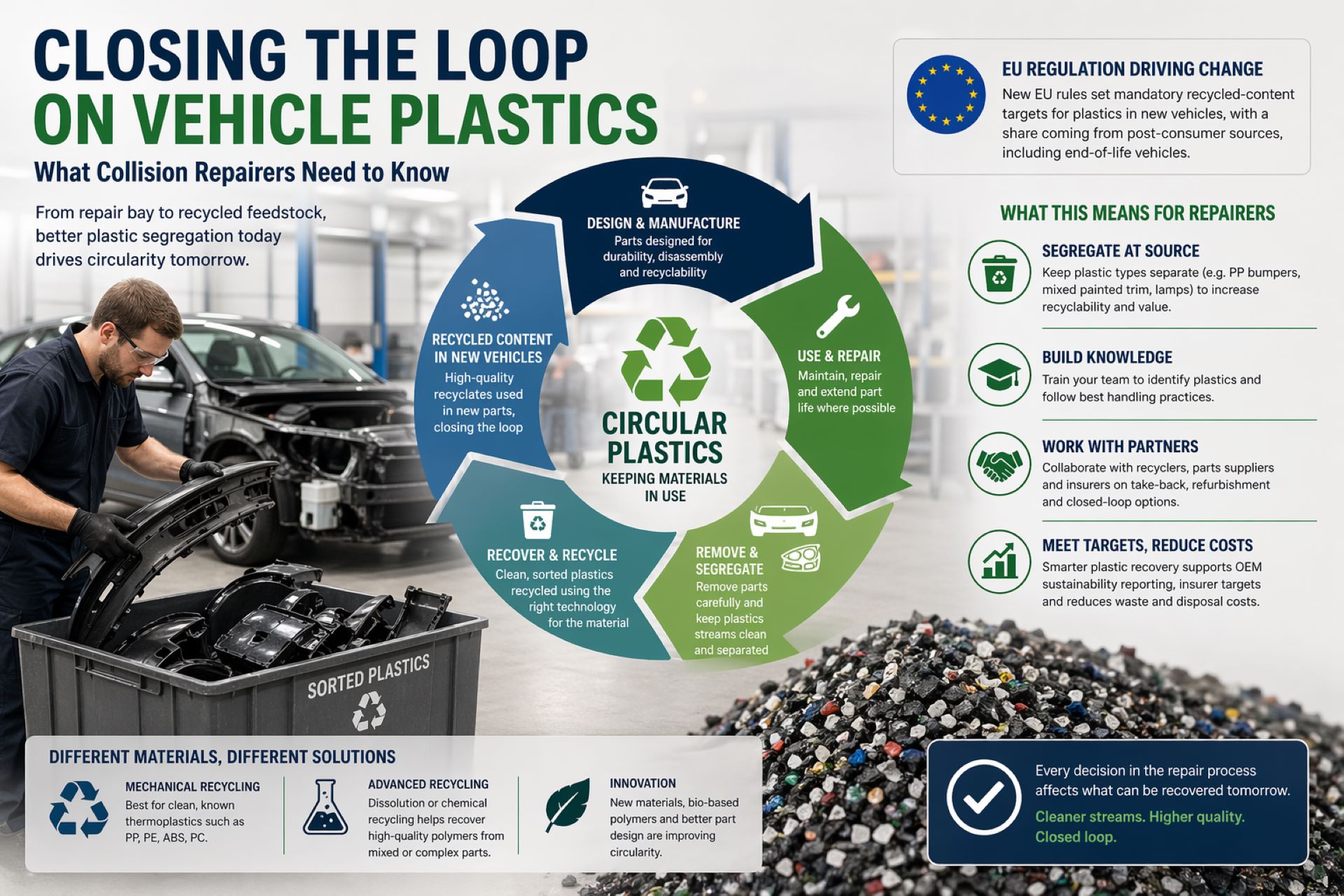
Collision repair sits at an important junction in this value chain. Bumpers, trims, undertrays, headlamp housings and interior parts are frequently removed, replaced and returned through insurer and OEM channels. Better segregation of plastics at source, even at a simple level such as keeping polypropylene bumper assemblies separate from mixed, painted trim, can materially improve recyclability. Equally, decisions such as whether to repair or replace a plastic component increasingly intersect with OEM sustainability reporting and insurer targets on waste and embodied carbon.
Technically, there is no single solution. Mechanical recycling works best for clean, known thermoplastics, while composites and multi-material parts can require more advanced approaches such as dissolution or chemical recycling to recover higher-quality polymers. Manufacturers are also redesigning parts for easier disassembly and introducing clearer material marking, while some suppliers are trialling bio-based fibres and polymers. Industry collaborations, including the Global Impact Coalition’s Automotive Plastics Circularity pilot in Europe, are testing whether dismantling and sorting specific polymer streams from end-of-life vehicles can create reliable feedstock for closed-loop use.
For repair businesses, the opportunity is to prepare now: ask recyclers what they can genuinely take, train staff to keep plastic streams cleaner, and work with parts suppliers on take-back and refurbishment options for lamps, bumpers and interior modules. The regulation wave is turning plastics from a hidden waste cost into a managed material stream. Workshops that can evidence smarter handling and recovery will be better placed to support OEM programmes, meet insurer requirements and reduce disposal costs without compromising repair quality.
Staff Writer
Reporting from the front lines of the collision repair industry, delivering expert analysis and the technical updates that drive the African automotive sector forward.
More From News

Zimbabwe Delegation Explores BAIC’s Role in Regional Automotive Growth
Zimbabwe’s automotive leaders visit BAIC South Africa to explore manufacturing, skills development, and regional industry collaboration.

What are SDVs and what do they mean for collision repair?
Software defined vehicles, or SDVs, are vehicles in which software rather than fixed hardware determines how most systems operate. Functions such...

Fuel price shock prompts insurer action to support South Africa’s repairers
South Africa’s motor body repair sector is under growing strain as sharp fuel price increases push operating costs higher, prompting some insurers...
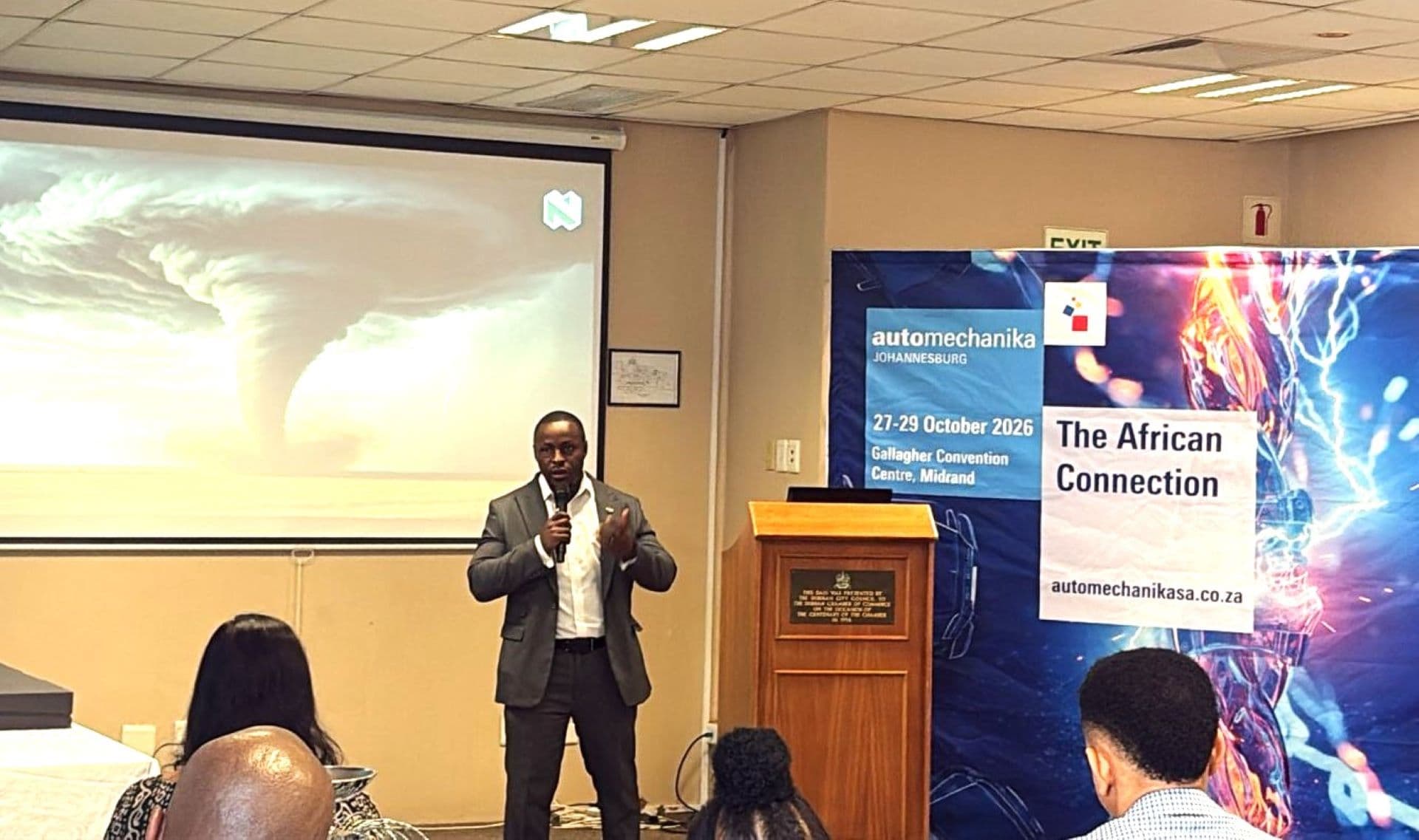
KwaZulu-Natal’s Automotive Momentum looked at
Durban’s Automechanika CEO Breakfast highlighted KZN’s rising automotive role, export growth and EV investment, plus aftermarket development.

We Buy Cars Drives Youth Employment
South Africa’s challenge of youth unemployment remains pressing, but targeted initiatives are beginning to show tangible results. We Buy Cars, in...

BASF Coatings advances sustainable accident repair with TÜV certified carbon assessment
BASF Coatings has strengthened its sustainability offering for the automotive refinish sector by securing TÜV Rheinland certification for the...