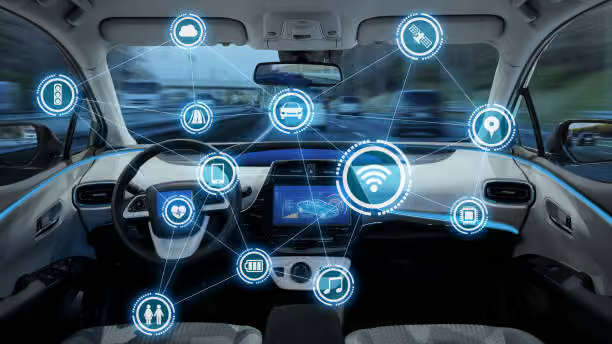
While the Consumer Electronics Show (CES) is best known for consumer gadgets, CES 2026 in Las Vegas underscored how rapidly automotive technology — including collision repair, safety, and training — is evolving.
This year’s show featured a mix of advanced sensing, connectivity, and immersive education tools with direct implications for the collision repair industry.
Smarter Collision Prevention and Sensing
Among the collision-related innovations on display was Eye-Net’s vehicle-to-everything (V2X) collision prevention system, which uses cellular connectivity to warn drivers of hazards beyond their direct line of sight. By detecting cross-traffic risks involving other vehicles, cyclists, or pedestrians, the system aims to reduce urban crashes and supplement existing advanced driving assistance systems (ADAS) technologies .
CES 2026 also featured next-generation sensing technologies designed to improve vehicle perception in challenging conditions. Companies showcased high-resolution radar and terahertz-based sensors intended to enhance long-range detection and all-weather performance — technologies that could reduce collision severity and influence future repair complexity .
I-CAR Brings Virtual Reality Training to CES
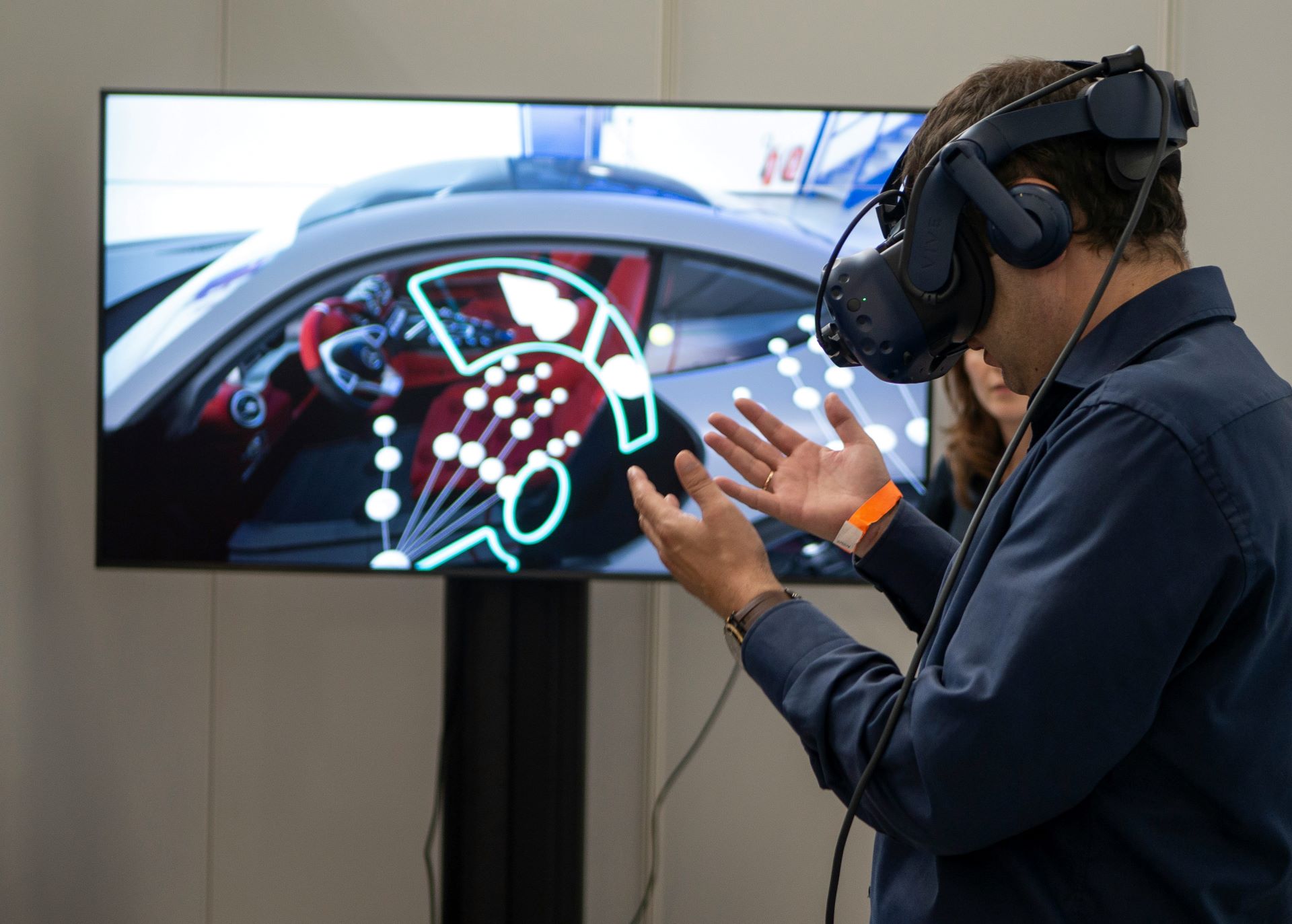
A notable collision-repair-specific presence at CES 2026 came from I-CAR, which demonstrated its virtual reality (VR) and mixed-reality (MR) training programs for collision repair professionals. I-CAR’s immersive training tools allow technicians to practice complex procedures — such as ADAS calibration, electric vehicle (EV) safety protocols, and advanced structural repairs — in a simulated, risk-free environment.
According to I-CAR, the VR training approach is designed to improve knowledge retention, technician confidence, and repair consistency as vehicles become more technologically advanced. CES attendees were able to experience these VR demonstrations firsthand, highlighting how immersive technology may help address technician shortages and training challenges facing the collision repair industry .
AI, Connectivity, and the Repair Workflow
Beyond hardware and training, CES 2026 emphasized the industry’s shift toward software-defined and artificial intelligence enabled (AI) vehicles. Automotive technology companies highlighted platforms that use artificial intelligence to monitor vehicle systems, support predictive maintenance, and enhance diagnostics — capabilities that could streamline post-collision inspections and repair planning in the future .
Although CES is not a traditional collision repair trade show, CES 2026 made clear that collision repair is increasingly influenced by connectivity, advanced sensing, and digital training tools. From V2X crash-avoidance systems to I-CAR’s VR-based technician education, the technologies unveiled in Las Vegas point toward a future where safer vehicles and smarter repairs go hand in hand.