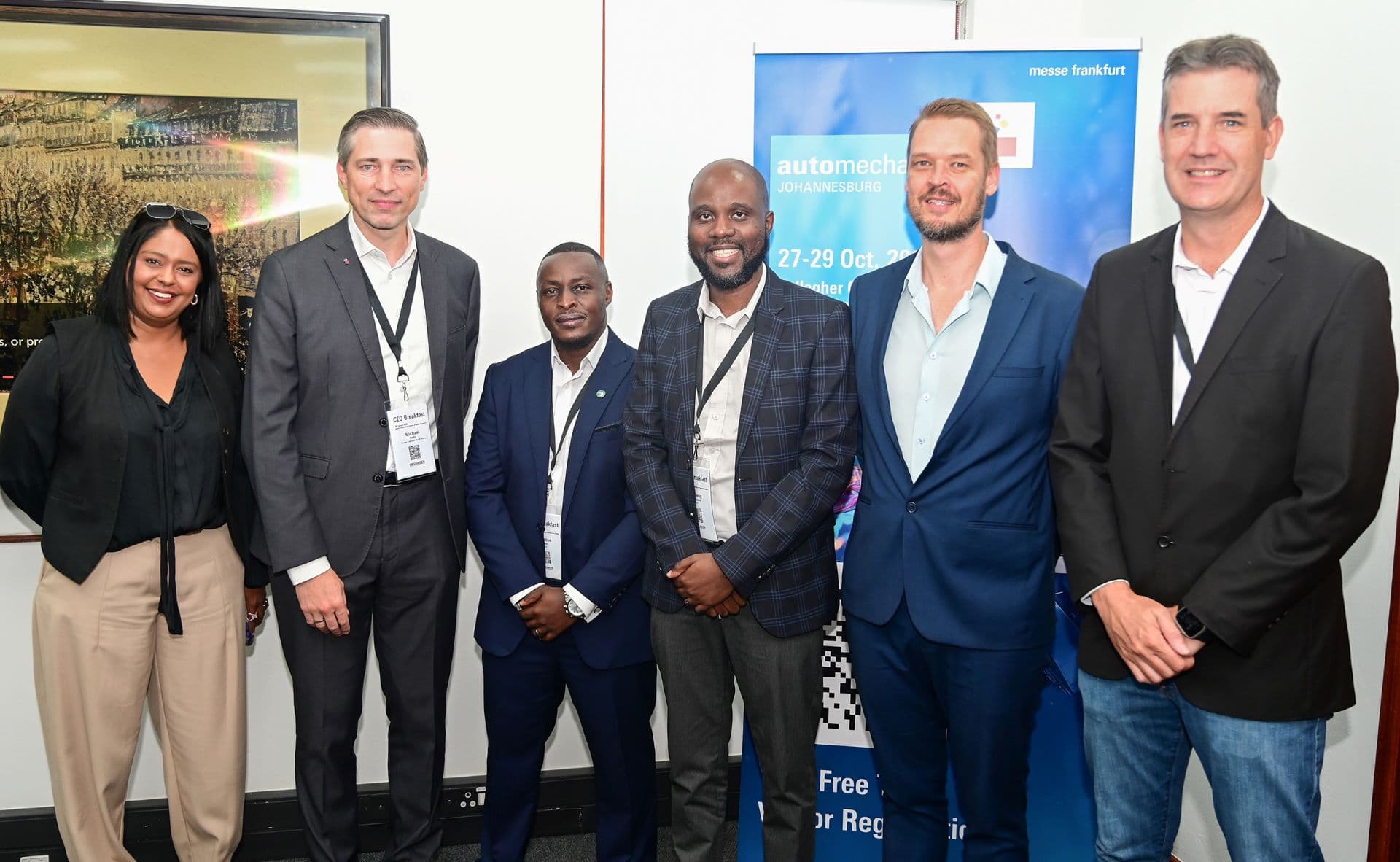
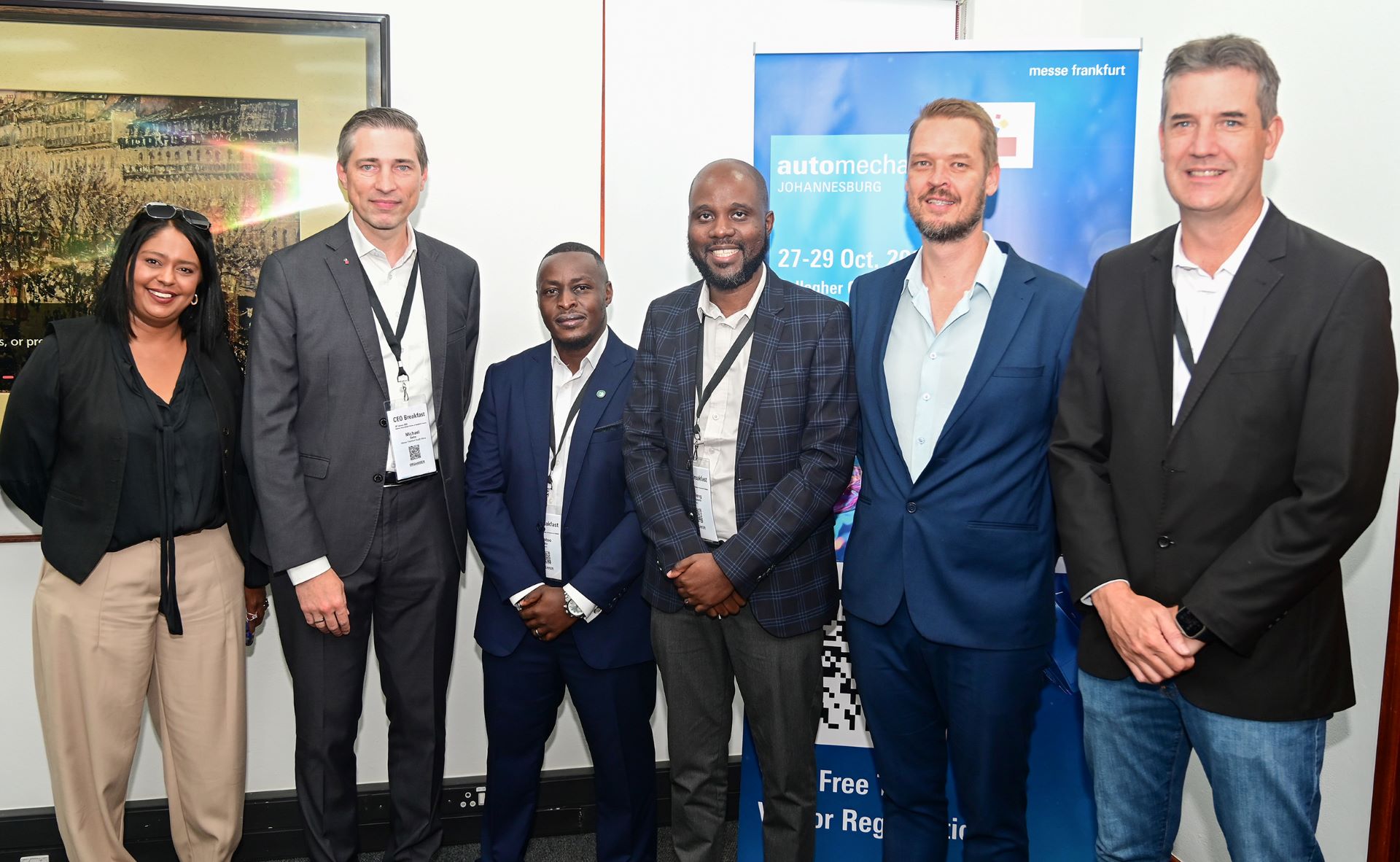
South Africa’s automotive sector has been urged to act swiftly and collaboratively to address a mounting skills crisis and the accelerating impact of technological change. This call to action emerged at Automechanika Johannesburg’s first CEO Breakfast of 2026, held at the South African German Chamber of Commerce, where industry leaders shared insights on the pressures reshaping the country’s mobility landscape.
Industry Strengths Underscored Amid Global Competition
Delivering his first formal address as CEO of AHK Southern Africa, Maximilian Butek highlighted the significant strengths that continue to position South Africa as a competitive player globally. He emphasised the value of the country’s well-established supplier base and deeply integrated supply chain, noting that these characteristics set South Africa apart in an increasingly crowded automotive market. Butek urged stakeholders to actively safeguard and elevate these advantages to maintain their strategic relevance.
A Deepening Skills Crisis
One of the most urgent concerns discussed was the escalating shortage of skilled artisans. Ipeleng Mabusela, CEO of the Retail Motor Industry Organisation (RMI), shared sobering data revealing a 31% decline in artisans over the past decade, despite a rise in apprentice intake. He stressed that this imbalance jeopardises mobility outcomes, industry safety and long-term economic transformation.
Mabusela emphasised the automotive retail and aftermarket sector’s critical role as the country’s primary employment hub within the automotive value chain, accounting for roughly 70% of jobs. Although aftermarket employment has grown modestly at a 1.2% compound annual rate between 2020 and 2024, he warned that workforce pipelines are still not expanding at the pace required. He called for “collaboration with intent” between government, training bodies and industry to rebuild and scale talent pathways.
Market Shifts Redefining Competition
Paul-Roux de Kock, Chief Analytics Officer at Lightstone, provided an analytical overview of shifts shaping the post-pandemic automotive landscape. He noted the recovery in new vehicle sales while pointing to several structural transformations: evolving consumer preferences, fluctuating pricing dynamics and a surge in market entrants expanding brand choice.
According to de Kock, this proliferation is making the light vehicle market “more crowded and more complex”, placing pressure on businesses to closely monitor changes in price positioning, brand performance and sourcing patterns to stay competitive.
Global Forces Reshaping Local Mobility
Greg Cress, Principal Director for Automotive & eMobility at Accenture South Africa, outlined five global forces propelling change across the automotive industry—and their implications for local manufacturers and suppliers.
He noted that the worldwide shift towards electric vehicles (EVs) represents an urgent call for South African OEMs to secure next-generation energy vehicle (NEV) production lines. In the nearer term, he suggested that advanced driver assistance systems (ADAS) and autonomous technologies offer significant localisation potential.
Cress highlighted the rapid advancement of autonomous capability, pointing out that Level 4 systems—vehicles capable of operating without human input in defined conditions—are already functioning in pilot environments abroad. He also emphasised the growing centrality of software and vehicle connectivity, with over-the-air update capabilities becoming standard across new models, enabling vehicles to receive upgrades remotely without entering a workshop.
Financial Sector Responds with Tailored Support
Representing Nedbank, Senior Manager of Manufacturing Tagatso Sello reaffirmed the banking sector’s commitment to supporting the industry’s transition. He stressed the need for flexible, sector-specific financial solutions rather than generic or standardised approaches, noting that the pace of change requires bespoke advisory and funding mechanisms.
Call for Greater Collaboration Across the Region
Tracy Gounden, Business Development and Portfolio Director at Messe Frankfurt South Africa, closed with a call for unprecedented collaboration to meet the sector’s current challenges. He described the organisation’s 2026 engagement strategy, which includes quarterly CEO breakfasts and six regional roadshows across Southern and East Africa, designed to strengthen partnerships, encourage data-sharing and foster resilience across the mobility ecosystem.
Automechanika Johannesburg 2026 will take place from 27 to 29 October at the Gallagher Convention Centre. Further information is available at: https://automechanika.za.messefrankfurt.com/johannesburg/en.html