AkzoNobel is purchasing significantly reduced carbon footprint raw materials fromBASF for its decorative paints production in EMEA (Europe, Middle East and Africa),demonstrating the shared commitment of both companies to drive down Scope 3emissions.
Signaling AkzoNobel’s intent to deliver more lower carbon products into themainstream, the agreement involves the company using BASF’s biomass balanced(BMB) ingredients – which don’t require any new formulations or changes to existing paint manufacturing processes. The end result of this approach is an AkzoNobel paint with exactly the same quality and performance, but with a reduced carbon footprint of at least 5%.
BASF replaces the fossil-based feedstock in the ingredients it supplies to AkzoNobel with renewable resources such as bionaphtha and biomethane via a mass balance approach. This mass balance approach is certified by an independent third party. It means AkzoNobel can purchase BASF’s acrylic binder (one of the main ingredients in decorative paints) with a significantly reduced carbon footprint.
“Integrating BASF’s BMB ingredients into our higher volume consumer products will help us achieve a significant overall impact in terms of carbon footprint reduction,” says Wijnand Bruinsma, AkzoNobel’s Director of Sustainability. “Our partnership means the carbon footprint of any paint we produce using the BMB approach will be cut by at least 5% to begin with, compared with the same formula produced using 100% fossil-based material.”
Dr. Jörg Niebergall, Senior Vice President, Dispersions Europe, at BASF adds:“We’re proud to support AkzoNobel accelerate its sustainability agenda. Through our broad portfolio of sustainable and low carbon products, we’re enabling the company to offer its customers products with a lower carbon footprint. We also provide data, tools and expertise, empowering AkzoNobel to make informed decisions. The collaboration demonstrates the strong commitment of both companies to a more sustainable future.”
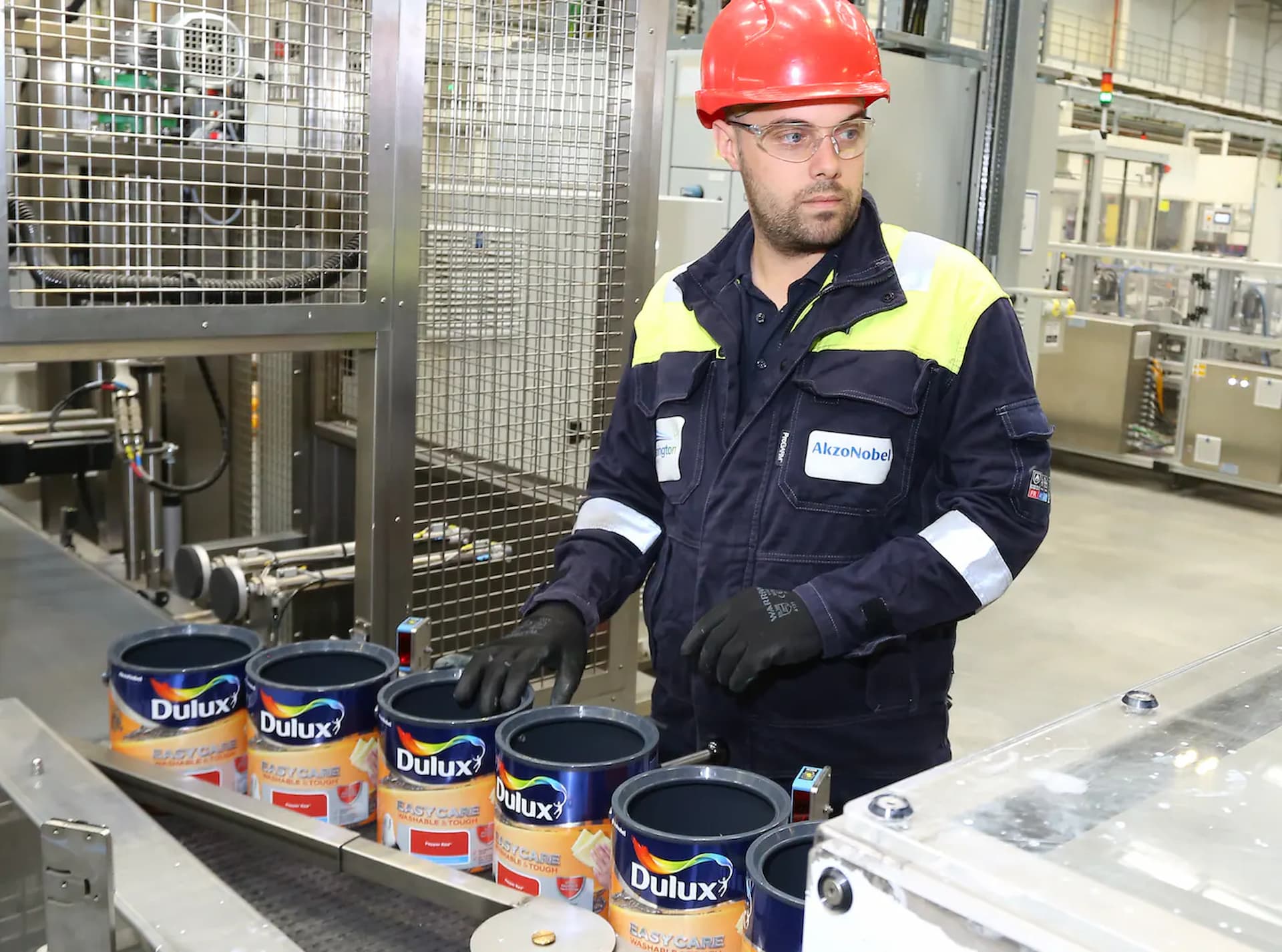
AkzoNobel in the UK is already preparing to launch its upgraded Dulux Easycarerange – which uses the reduced CO2 ingredients – during Q2 this year. It’s the firsttime the company has used certified mass balanced products (replacing fossil fuels with renewable raw materials) for an acrylic binder. “We can’t drive the reduction of Scope 3 carbon emissions by ourselves, that’s why collaboration is so important,” adds Bruinsma. “Partnerships like this play a key role in making change happen quicker and teaming up with BASF will help us create a scalable approach to more sustainable solutions.”
AkzoNobel is working to achieve RedCert2 certification for all relevant productionsites in Europe – a recognized mass balance standard for the chemical industry.