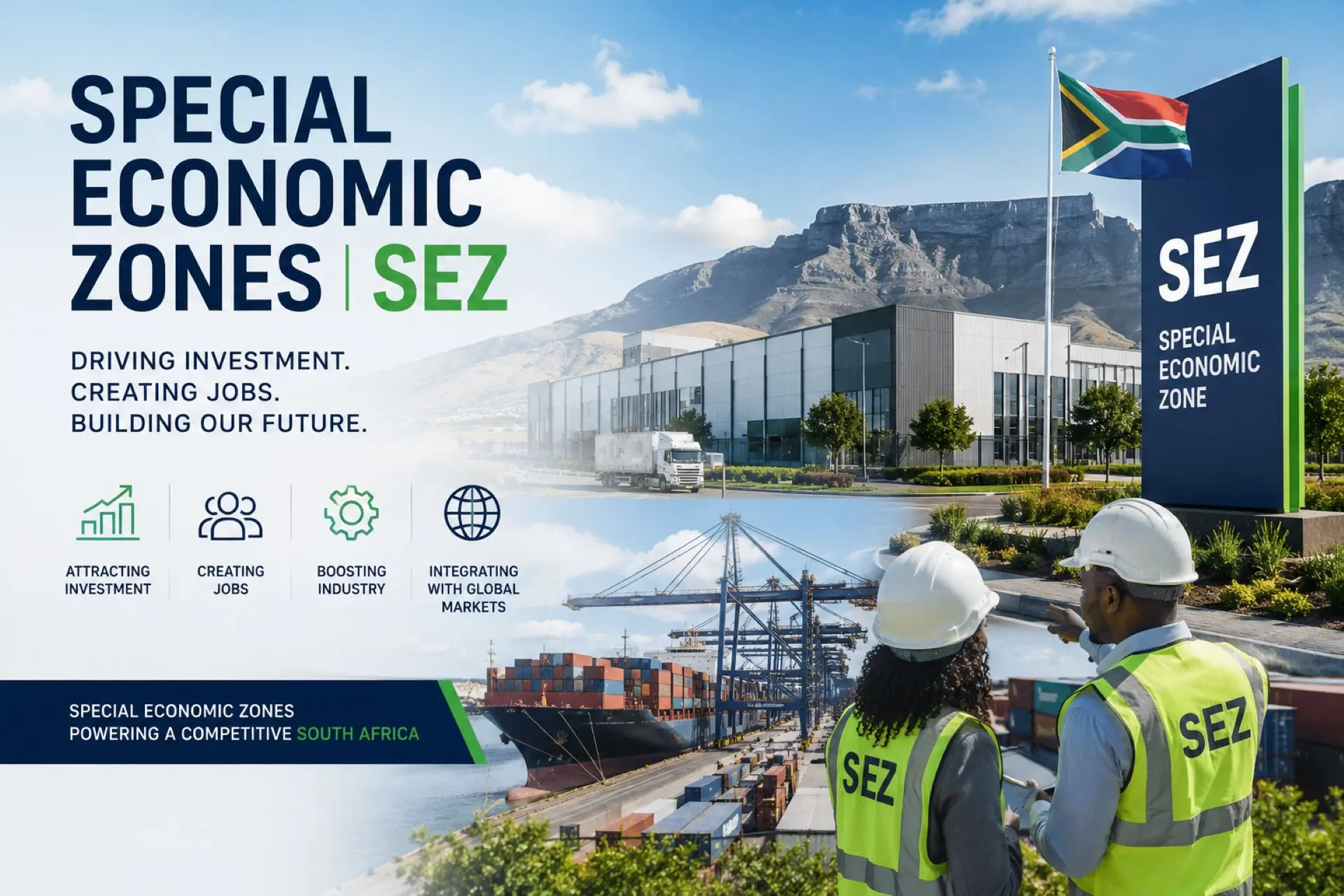
Speaking at the Second International Special Economic Zones Conference in Durban, Mashatile said the programme had helped attract investment across sectors such as automotive manufacturing, agro-processing and renewable energy.
The figures are based on a World Bank study, which highlights the role of Special Economic Zones in supporting industrial development and expanding economic activity.
Government’s approach began in 1997 with the Industrial Development Zone programme, which was designed to establish high-quality industrial hubs, attract investors, increase exports and strengthen South Africa’s manufacturing base.
Mashatile said the initiative had since evolved into the Special Economic Zones programme, with a wider focus on speeding up industrialisation, creating employment and encouraging more inclusive economic growth in South Africa and across the continent.
He pointed to projects such as the Tshwane Automotive Special Economic Zone and the Coega Industrial Development Zone in the Eastern Cape as examples of how SEZs can support skills development, strengthen supply chains and stimulate regional economies.
Coega, designated in 2001, has played a major role in shaping government’s thinking on industrial zones. By 2010, more than R3 billion in public funding had been invested in the zone, helping to attract 21 investments worth R9.2 billion and creating 2,837 operational jobs.
However, Mashatile acknowledged that the early model had limitations. Some investments were relocations rather than entirely new ventures, while weak municipal service delivery and limited integration with surrounding communities raised concerns that some zones could become isolated centres of growth.
In response, government shifted towards the Special Economic Zones model in 2012 under the SEZ Act. The programme is now moving into a third phase through the Spatial Industrial Development Strategy.
The strategy aims to strengthen manufacturing and increase its contribution to gross domestic product, while using the sector’s wider economic impact to help address unemployment, particularly among young people and women.
Government has identified three priorities to guide manufacturing-led industrialisation: decarbonisation, diversification and digitalisation. These include the development of low-carbon technologies, the expansion of value-added manufacturing and export markets, and the adoption of digital tools to improve productivity.
Mashatile said the SEZ programme would remain central to South Africa’s re-industrialisation agenda, building on an existing network of zones and industrial parks across the country.
He added that South Africa must compete for investment by being strategic, reliable and inclusive, rather than simply trying to offer the lowest costs.
With more than 5,400 Special Economic Zones operating globally, Mashatile said South Africa’s zones must become engines of investment, innovation and opportunity, while avoiding the risk of becoming “islands of prosperity”.
He said SEZs should help unlock regional potential in provinces across the country, connect local enterprises to regional and global markets, and position South Africa as a gateway to the African continent.