South Africa's automotive industry could soon undergo significant changes as discussions continue around the development of a national End-of-Life Vehicle (ELV) policy. Industry stakeholders believe the proposed framework has the potential to improve sustainability, strengthen vehicle traceability and create greater structure within the country's vehicle recycling and salvage sectors.
The South African Motor Body Repairers' Association (SAMBRA) and the Retail Motor Industry Organisation (RMI) are actively participating in discussions with government and industry partners to help shape a policy that balances environmental objectives with the practical realities of the local automotive market.
If successfully implemented, an ELV framework could support responsible recycling practices, encourage the recovery of reusable vehicle components and align South Africa more closely with international sustainability trends, particularly in export markets where circular economy principles are becoming increasingly important.
Balancing Sustainability and Industry Needs
While industry bodies generally support the creation of a structured end-of-life vehicle framework, they have emphasised the importance of avoiding policies that encourage unnecessary vehicle scrapping.
Stakeholders have raised concerns that vehicles could potentially be removed from service before reaching the end of their safe and economically viable lifespan if policy measures are not carefully designed. Such an approach could have unintended consequences for consumers, repair businesses and the wider automotive value chain.
Industry representatives argue that environmental objectives should be balanced with affordability, road safety and long-term economic sustainability to ensure the policy delivers positive outcomes across the sector.
Improving Vehicle Traceability
A central focus of current discussions is the possible introduction of a comprehensive vehicle traceability and history management system.
Enhanced traceability would allow vehicles to be monitored throughout their lifecycle, helping to improve transparency around ownership, repairs, salvage activities and eventual disposal. Such a system could also reduce the risk of severely damaged or written-off vehicles re-entering the market without appropriate oversight.
At the same time, industry participants believe effective traceability measures can support the continued use of vehicles that can be safely repaired and restored through recognised repair processes, rather than being unnecessarily scrapped.
Industry Participation in Policy Development
Automotive industry organisations are playing an active role in shaping the proposed framework to ensure it remains practical and relevant to local operating conditions.
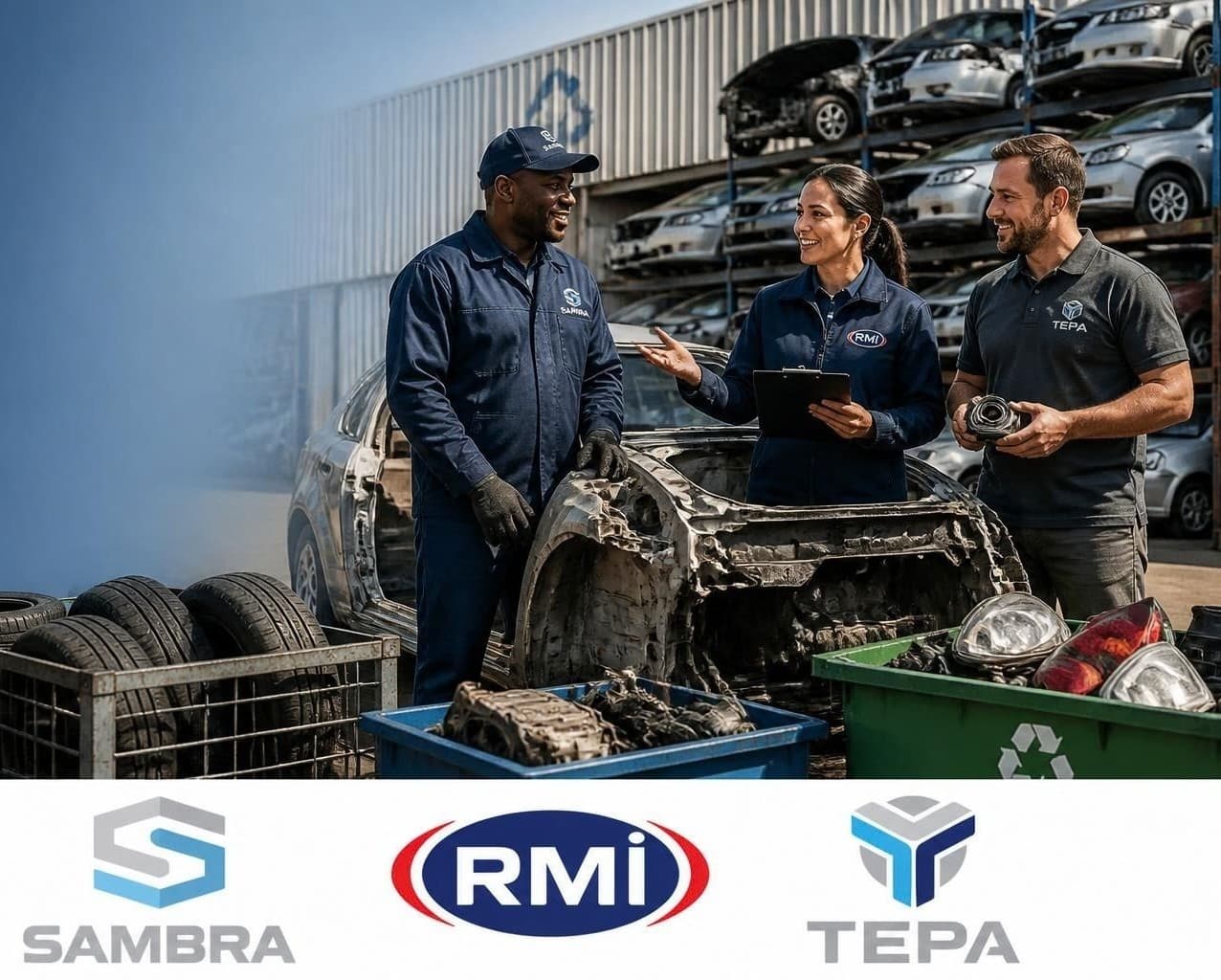
Representatives from the RMI, SAMBRA and the Tyre, Equipment, Parts Association (TEPA) recently participated in discussions involving government stakeholders and international representatives to provide input on key aspects of policy development.
These engagements created opportunities for industry experts to share insight into vehicle repairs, component recovery, salvage operations and aftermarket activities, while highlighting challenges that may arise if certain policy measures are implemented without adequate consultation.
Supporting a Circular Automotive Economy
One of the long-term goals of an End-of-Life Vehicle policy is to support the development of a more circular economy within the automotive sector.
By encouraging responsible recycling, parts recovery and materials reclamation, the framework could help reduce waste while creating new opportunities for businesses involved in vehicle dismantling, recycling and component refurbishment.
Such initiatives may also improve resource efficiency and contribute to broader environmental objectives without compromising the repairability and affordability of vehicles.
Creating a Sustainable Framework for the Future
As consultations continue, industry bodies maintain that a successful ELV policy should protect consumers, support repair businesses and encourage environmentally responsible practices throughout the vehicle lifecycle.
Stakeholders believe South Africa has an opportunity to develop a framework that promotes sustainability while recognising the important role that repair, refurbishment and responsible parts reuse play in the local automotive economy.
If implemented effectively, the policy could help modernise the country's vehicle recycling ecosystem, strengthen industry oversight and support a more sustainable and economically resilient automotive sector for years to come.